

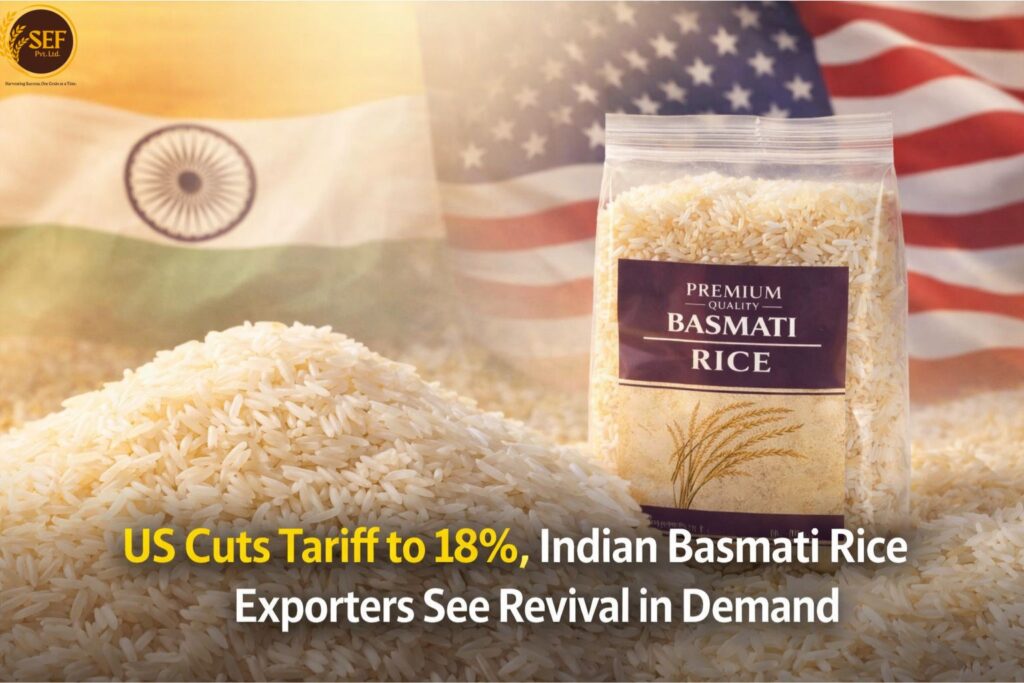
Indian basmati rice exporters have welcomed the proposed reduction in US import tariffs from 50% to 18%, calling it a timely boost for a sector that has struggled with policy hurdles and geopolitical disruptions.
The revised tariff structure follows a trade understanding reached between Prime Minister Narendra Modi and US President Donald Trump. Under the agreement, the United States reduced the reciprocal tariff to 18% and waived a 25% punitive levy earlier linked to India’s crude oil purchases from Russia. This change significantly lowers the cost burden on Indian basmati shipments to the US market.
Export competitiveness set to improve
Exporters say the earlier tariff hike sharply reduced India’s competitiveness in the American market. Indian basmati prices rose, while rival suppliers gained ground. As a result, several export contracts were either cancelled or scaled back.
Industry participants believe the new tariff level will help stabilise Indian rice prices and allow exporters to regain lost market share. The US remains one of the most valuable destinations for premium basmati, with annual demand estimated at around 250,000 tonnes.
Iran disruption adds pressure on prices
The tariff relief comes at a crucial time. Iran, traditionally among the largest buyers of Indian basmati rice, has reduced imports due to internal economic stress and ongoing geopolitical tensions. Payment delays and weaker demand from Iran have weighed on prices in domestic mandis.
Exporters say these factors pushed down procurement prices and affected farmer incomes across major basmati-growing regions.
Afghanistan emerges as a key market
While demand from the US weakened earlier, Afghanistan offered critical support to Indian exporters. Due to strained relations with Pakistan and repeated border closures, Afghanistan increased purchases from India.
Traders involved in export rice from India to Afghanistan say demand remained steady even during the period of high US tariffs. This shift helped cushion the industry during a difficult phase.
Policy clarity offers relief to farmers
Over the past two years, the basmati sector faced multiple challenges, including minimum export price norms, volatile global demand, and rising compliance costs. Exporters now expect improved overseas orders to translate into better procurement prices for farmers in the coming season.
Government officials said the revised tariff gives India an edge over competing suppliers. The new rate remains lower than those faced by several regional exporters, strengthening India’s position among the top 10 rice exporters in India supplying premium varieties.
Outlook
Market participants anticipate a gradual recovery in export volumes if global demand remains stable and policy support persists. Any sustained recovery could ease pressure on domestic prices and improve returns for farmers ahead of the next procurement cycle.