
India is one of the world’s leading exporters of premium Basmati and Non-Basmati rice, supplying consistent volumes to over 150 global markets. Among these destinations, Afghanistan remains a strong and stable buyer due to its long-standing preference for Indian long-grain rice, competitive pricing, and high consumption in both households and food businesses.
In this complete guide, you’ll learn how to export rice from India to Afghanistan, including required documents, shipping routes, quality standards, packaging regulations, demand trends, and step-by-step export procedures.
As you read further, you’ll also find useful insights related to global rice trade that help exporters expand into other regions through smooth processes and reliable buyer connections.
Rice is the central grain in Afghan households, restaurants, food services, and wholesale markets. Afghanistan primarily consumes long-grain varieties for dishes like Kabuli Pulao, Yakhni Pulao, Zamarod Pulao, Challow, and Shola. Due to limited domestic rice production, Afghanistan heavily depends on India for a consistent supply.
In 2024–25, Afghanistan imported significant quantities of Indian rice due to:
India exports rice to several high-demand destinations, including Australia and Canada, and continues strengthening its global presence as listed in the top 10 rice exporters in India. Afghanistan remains a key and reliable market within this network.
Afghan dishes require rice with long grains, high elongation, and strong aroma.
Top preferred Indian varieties include:
However, these grains cook fluffy, aromatic, and visually appealing ideal for traditional Afghan recipes.
Indian Non-Basmati varieties like IR64 are priced attractively for Afghan wholesalers, retailers, and food service buyers. Prices remain more favorable than alternatives from Pakistan, Iran, or Central Asian countries.
Afghanistan imports both premium and budget-friendly rice grades. The most demanded options include:
India’s large milling capacity ensures stable, year-round supply.
Below is the complete India to Afghanistan rice export process, covering compliance, documentation, shipping, packaging, and final delivery.
To export rice from India, the exporter must have:
These ensure legal compliance and eligibility for global rice trade.
Demand varies by region, customer segment, and price bracket. Afghan buyers typically order:
Each category has different pricing based on grain length, processing level, polish quality, and packaging.
Before shipping rice to Afghanistan, exporters must organize all essential export documents. Moreover, these documents ensure smooth customs clearance in both India and Afghanistan. The basic documents required at this stage include:
As a result, completing this step helps avoid delays and ensures your export process moves forward without complications.
Common packaging sizes for Afghanistan include:
Bags may be PP, Jute, or BOPP laminated, depending on buyer preference. Bulk buyers often request customized printing.
Below is a clear and easy-to-understand table explaining the main shipping routes used for transporting rice from India to Afghanistan.
| Route Name | Path | Best For | Advantages |
|---|---|---|---|
| Chabahar Port Route | India → Iran → Afghanistan | Large shipments, bulk importers | Stable, government-supported route enabling a smooth India to Afghanistan rice export process |
| Dubai Transshipment Route | India → UAE → Afghanistan | Mixed cargo, smaller shipments | Highly flexible; ideal for Afghan buyers who import multiple commodities |
| Air Cargo Route | India → Afghanistan | Urgent, high-value shipments | Fastest delivery method for premium Basmati orders |
Once the cargo reaches Iran (Chabahar Port) or the UAE (Dubai), it is transported to Afghanistan by road or air towards major cities such as:
Efficient documentation ensures faster customs clearance and smooth delivery.
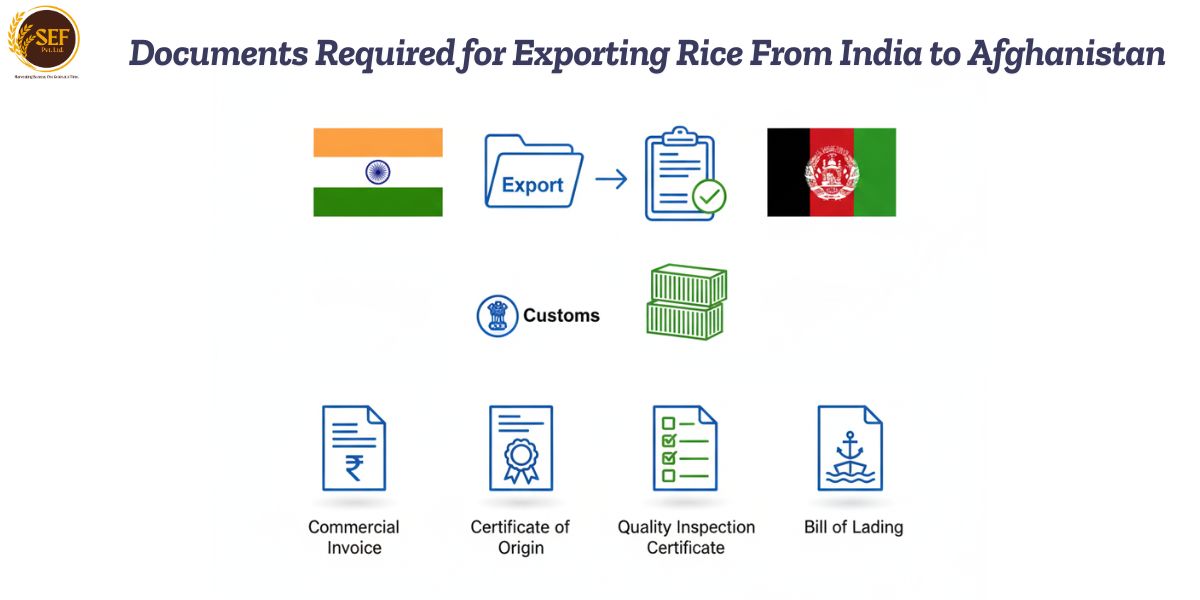
Exporters must prepare the following complete and compliant documentation set. In addition, each document plays a vital role in meeting Afghanistan’s import regulations.
Overall, maintaining a complete documentation set also benefits exporters shipping to other destinations such as Australia, Canada, Saudi Arabia, and Germany.
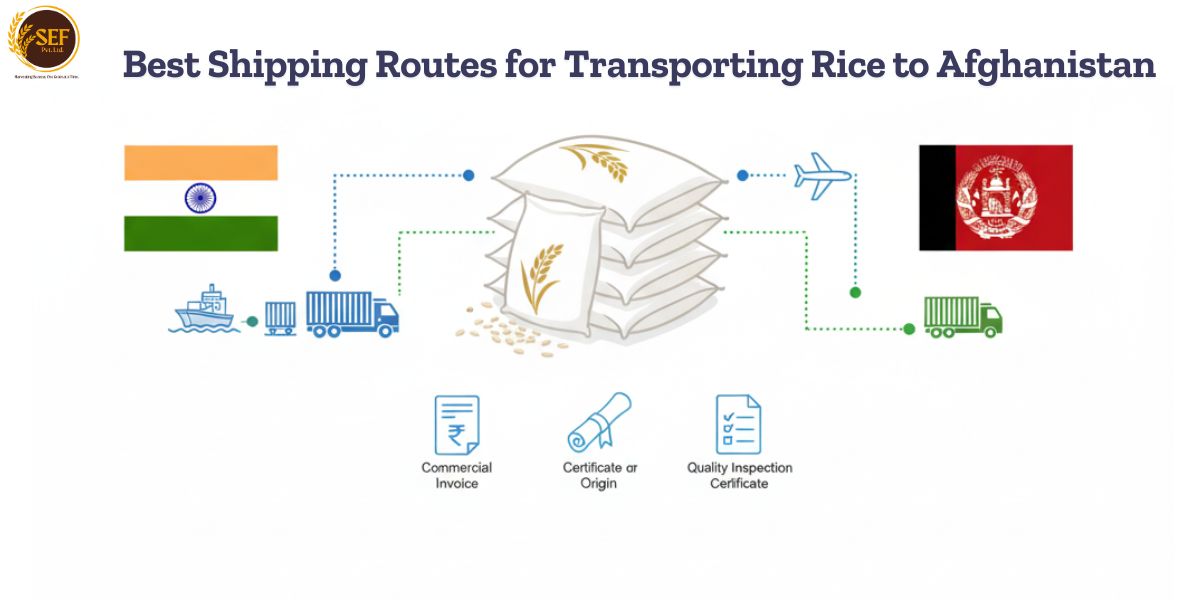
The most efficient routes are:
Chabahar Port Route
The preferred route due to stable political coordination between India, Iran, and Afghanistan.
Land Transit Route (through approved regional corridors)
Used when Afghan wholesalers need faster restocking and regional transit permissions are available.
Dubai Transshipment Route
Used by Afghan buyers who import goods from multiple international suppliers.
These optimized routes help India maintain strong export performance across multiple destinations, including shipments such as export rice from India to Australia.
The cost of exporting rice from India to Afghanistan in 2025 depends on the rice variety, quality grading, processing type, packaging, and logistics route. Below is the updated FOB India price range commonly used by Afghan importers.
| Rice Variety | Price Range (USD/MT) |
|---|---|
| 1121 Basmati (Raw / Steam / Sella) | 900 – 1500 USD |
| 1509 Basmati | 750 – 1100 USD |
| IR64 Long-Grain | 400 – 520 USD |
| Sona Masoori | 500 – 620 USD |
| Parboiled / Sella Rice | 450 – 600 USD |
These rates may vary based on order volume, packaging requirements, and seasonal market trends.
Similarly, price behaviour for Afghan buyers reflects trends seen in other major destinations. For example, in markets where companies export rice from India to Germany, factors like quality grade, rice variety, and shipment size play a major role in determining the final export price.
Suitable for premium households and restaurants.
Economical but high-quality long-grain Basmati.
Most demanded non-basmati for general consumption.
Used heavily in restaurants and catering services.
Ultra-light, medium-grain rice for mixed dishes.
These varieties form a major portion of international shipments, similar to imports received in countries such as Germany.
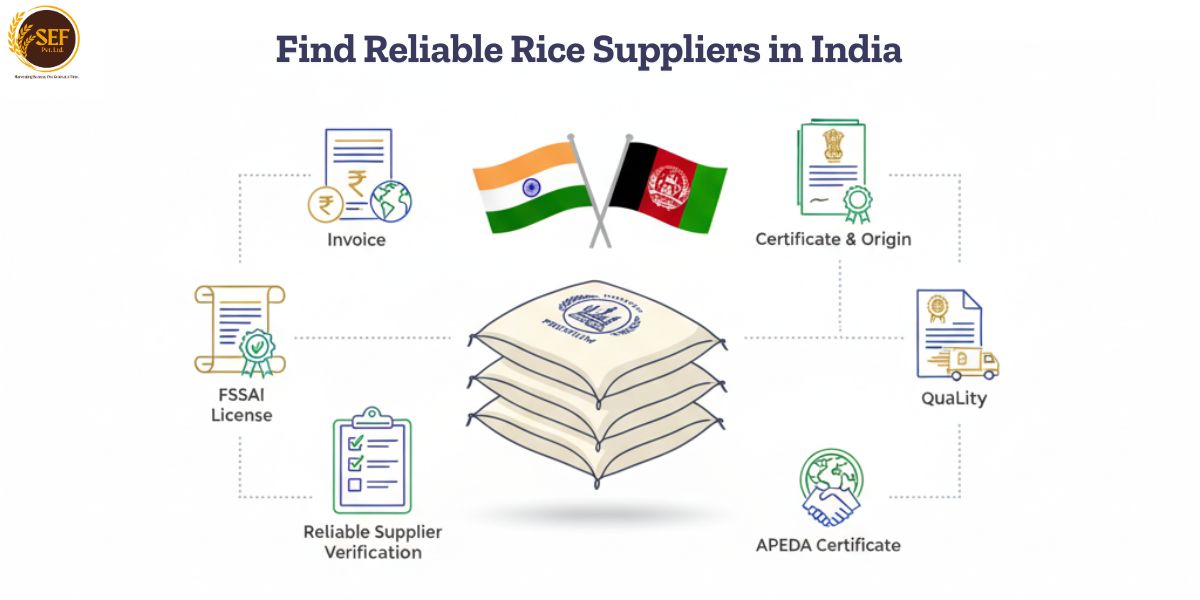
When selecting an exporter, Afghan importers should evaluate:
Reliable sourcing is essential for maintaining consistent supply in Afghan wholesale markets, supermarkets, and retail stores.
Shah Enterprises supplies premium Basmati and Non-Basmati rice to Afghanistan and several international destinations with strict quality standards and transparent processes.
Shah Enterprises supports both small importers and large distributors with consistent supply and reliable service.
Afghanistan’s demand for Indian Basmati and Non-Basmati rice is set to increase further in 2025 due to rising consumption, regional trade stability, and affordable pricing. India remains the most dependable source for long-grain aromatic rice for Afghan wholesalers, retailers, businesses, and food service operators.
If you are planning to export rice from India to Afghanistan or wish to enter the region’s import market with long-term supply assurance, choosing a trusted exporter is critical. Shah Enterprises provides high-quality rice, competitive prices, and complete documentation support to simplify your import process from start to finish.
Shah Enterprises supplies premium Basmati & Non-Basmati rice with competitive pricing and reliable delivery to Afghanistan.
Afghanistan mainly imports rice from India due to consistent quality, long-grain varieties, and affordable pricing. Smaller quantities also come from Iran and Central Asian suppliers.
Yes. India supplies large volumes of premium Basmati varieties such as 1121 and 1509, which are widely used in Afghan households, restaurants, and wholesale markets.
Key documents include IEC, APEDA certificate, FSSAI license, Certificate of Origin, Phytosanitary Certificate, Commercial Invoice, Packing List, and Bill of Lading.
Long-grain varieties like 1121 Basmati, 1509 Basmati, IR64 Non-Basmati, and Sella rice are the most demanded in Afghan markets.
Many exporters serve the Afghan market, but Shah Enterprises is recognized for consistent quality, competitive pricing, and reliable delivery support.
