

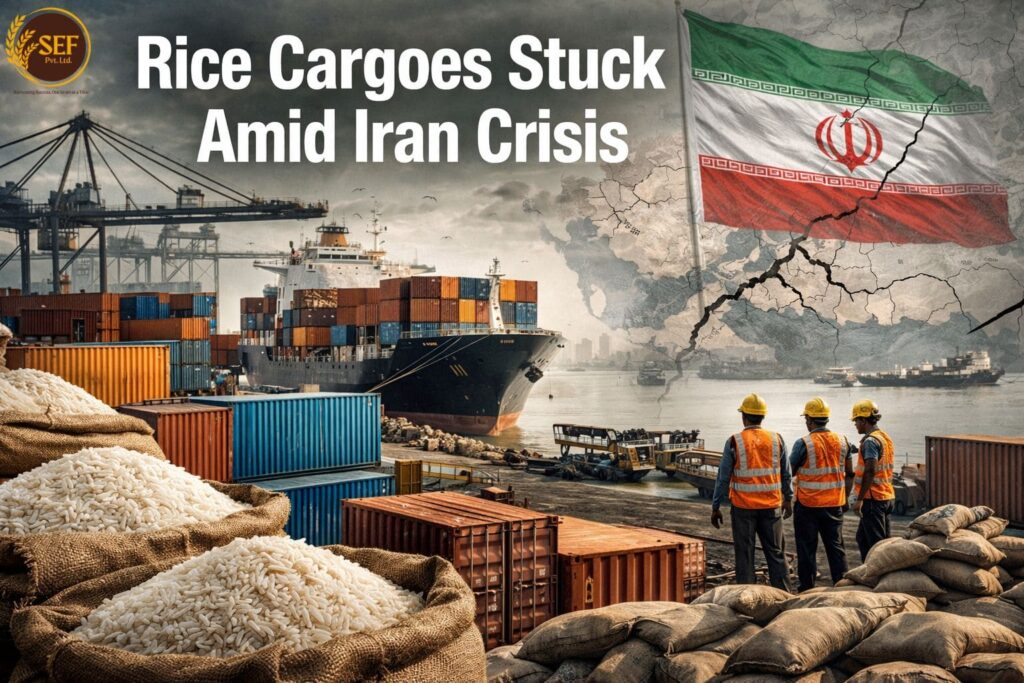
India’s basmati rice trade has entered a critical phase. Escalating tensions involving Iran, the United States, and Israel have disrupted shipping routes across West Asia. As a result, thousands of tonnes of rice remain stranded at Indian ports.
Exporters report severe vessel shortages and rising freight costs. The uncertainty now threatens India’s multi-billion-dollar basmati export industry.
2–2.5 Lakh Tonnes of Basmati Await Shipment
According to industry estimates, nearly 200,000 to 250,000 tonnes of basmati rice are currently stuck at major Indian ports. These volumes exclude cargo already in transit and stock stored in port warehouses.
Exporters say shipping lines hesitate to operate in high-risk maritime zones. Consequently, traders struggle to secure vessels for Middle East destinations.
The delay has created cash-flow pressure. Many exporters have requested government support, including a waiver of port ground rent and relief on interest costs incurred due to shipment delays.
Middle East Remains India’s Largest Basmati Market
India leads global basmati exports. The Middle East remains its largest buyer.
Key destinations include:
- Iran
- Iraq
- Saudi Arabia
- United Arab Emirates
Government data shows India exported 4.7 million tonnes of basmati rice worth nearly $4 billion in the nine months ending December.
However, current geopolitical instability now threatens these flows.
Freight Surcharges Increase Export Burden
Shipping companies have already introduced additional surcharges of around $2,000 per container. Insurance providers have also raised premiums due to elevated maritime risk.
As logistics costs rise, exporter margins shrink. Ultimately, these higher costs may influence food prices in importing countries.
If disruptions continue, trade experts expect freight rates to increase further.
Wider Impact Beyond Basmati
The crisis will not affect basmati rice alone. Other agricultural commodities may also face shipment delays.
Exporters fear prolonged instability could:
- Increase storage costs at Indian ports
- Extend payment cycles
- Pressure current Indian rice rates
- Reduce liquidity in the export market
If shipments remain stalled, domestic supply may rise temporarily. That scenario could influence current Indian rice prices, particularly in key producing states such as Punjab and Haryana.
Risk of Short-Term Trade Shock
Industry leaders describe the situation as a short-term disruption. However, they warn that prolonged conflict could trigger panic buying once routes reopen.
Maritime corridors near the Strait of Hormuz remain strategically sensitive. Any escalation in this zone could tighten shipping capacity further.
For now, exporters continue to monitor developments while seeking government intervention to reduce financial strain.
What does this mean for Indian Exporters?
India’s basmati trade remains fundamentally strong. Demand from West Asia continues. Yet exporters must now manage:
- Higher freight charges
- Rising insurance premiums
- Port congestion
- Delayed payments
Government policy support and geopolitical stability will determine how quickly normal trade resumes.
Until then, shipment delays may continue to impact exporters and influence domestic pricing trends.