
India is the world’s largest rice exporter, supplying premium-quality grains to over 150 countries. Among the rapidly growing markets in the Middle East, Bahrain stands out as a high-potential destination due to its strong demand for Indian basmati and non-basmati rice.
If you’re planning to export rice from India, this detailed guide will walk you through the complete process, from business registration to shipping, documentation, and finding buyers in Bahrain.
Bahrain heavily depends on food imports due to limited agricultural production. Indian rice, especially basmati, is highly preferred for its aroma, long grains, and cooking quality.
For exporters, this creates a profitable opportunity with consistent demand throughout the year.
India offers a wide variety of rice suitable for different consumer segments. Understanding the types of rice in India will help you choose the right product for export.
Selecting the right rice variety depends on your target buyers and pricing strategy.
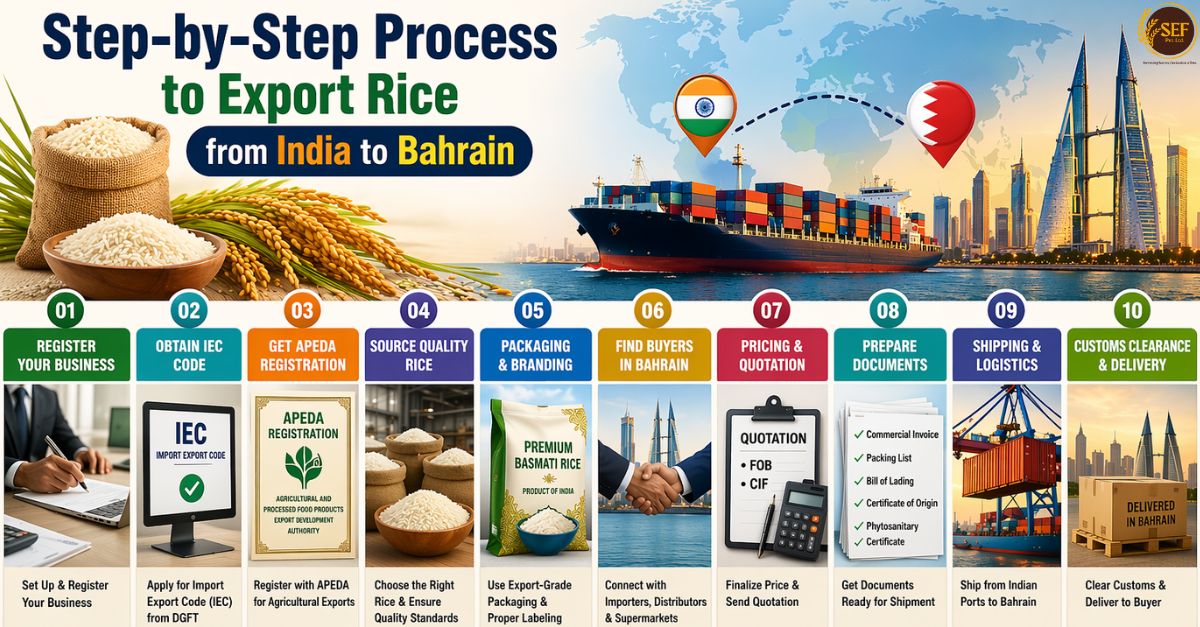
Start by registering your business legally:
A registered entity builds trust with international buyers.
The IEC is mandatory to export rice from India. It is issued by the Directorate General of Foreign Trade (DGFT).
The Agricultural and Processed Food Products Export Development Authority (APEDA) regulates agricultural exports.
Benefits:
Work with reliable millers or suppliers. Many exporters collaborate with the top 10 rice exporters in India to ensure consistent quality and supply.
Quality factors:
Good packaging enhances product value and attracts buyers.
Best practices:
You can find importers through:
Pricing is a key factor in securing deals.
Common pricing terms:
Competitive Indian rice prices give exporters an advantage in the Bahrain market.
Prepare the following documents:
Choose reliable ports such as:
Shipping time to Bahrain is typically 10–20 days.
Ensure smooth customs clearance by:
| Cost Component | Estimated Cost (USD per Ton) |
|---|---|
| Rice Procurement | $800 – $1500 |
| Packaging | $50 – $100 |
| Inland Transportation | $100 – $200 |
| Freight Charges | $200 – $400 |
| Documentation | $50 – $100 |
| Total Cost | $1200 – $2300 |
These costs may vary depending on quality, quantity, and market conditions.
Before exporting, ensure compliance with Bahrain’s import requirements:
Failure to comply may lead to shipment rejection.
Exporting rice can be highly profitable when done correctly.
Building strong relationships with buyers increases repeat orders and long-term profits.
Solution: Lock prices through contracts
Solution: Maintain strict quality control
Solution: Work with experienced freight partners
With increasing demand and population growth, Bahrain will continue to rely on imported food. Indian exporters who maintain quality and consistency will benefit from long-term opportunities.
Exporting rice from India to Bahrain is a lucrative business opportunity driven by high demand and competitive pricing. By following the correct process, ensuring compliance, and maintaining quality, you can build a successful export business.
Whether you’re a beginner or an experienced trader, now is the right time to enter the global rice market and expand your reach internationally.
Partner with Shah Enterprises for export-quality 1121, 1718, 1509, 1401 & Pusa Basmati rice, competitive pricing, bulk supply, and reliable Bahrain shipping support.
Register your business, obtain IEC and APEDA certification, and find buyers in Bahrain.
1121 basmati rice is the most popular variety.
It depends on quantity, but small exporters can start with $5,000–$10,000.
Usually 10–20 days depending on the port and shipping line.
Premium basmati rice and parboiled sella rice have the highest demand.
