

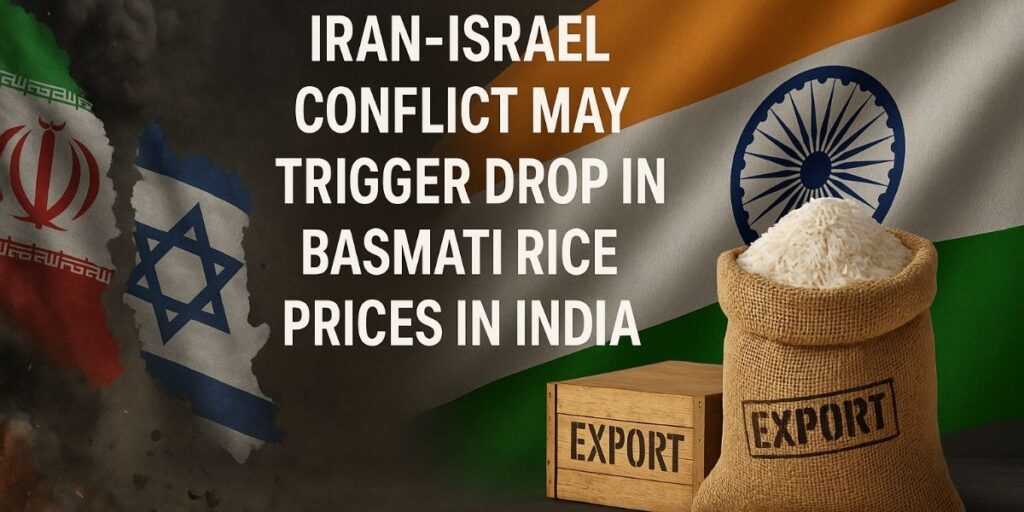
India’s Basmati rice market may see a decline in prices in the coming weeks due to growing geopolitical tensions between Iran and Israel. Trade experts suggest that rice exports to Iran, one of India’s top Basmati buyers, could slow down significantly, which may impact domestic pricing and demand.
Also Read – India’s Rice Production Forecast to Hit Record 151 MT in 2025–26
Tensions Affecting Trade with Iran
According to the Indian Rice Export Federation, unsettled payments and shipping issues are contributing to uncertainty in the export market. Current trade practices with Iran involve 20% advance payments, while the remaining transactions occur on a 180-day credit basis. Industry estimates suggest that outstanding payments from Iranian buyers could be between ₹1,000–1,200 crore.
In FY2024–25, India exported Basmati rice worth ₹6,374 crore to Iran, making up 12.6% of total Basmati exports. Iran is the third-largest buyer of Indian Basmati rice, following Saudi Arabia and Iraq.
Also Read – Global Demand For Premium Basmati Rice Rises: Top Opportunities for Indian Exporters
Price Movements and Export Trends
Due to increased exports over the past two months, domestic Basmati prices had surged by 15–20%. As prices ranged between ₹75–90 per kilogram, major West Asian buyers—including Iran—ramped up purchases, leading to a spike in domestic prices.
However, recent geopolitical uncertainty has led to a slowdown. Exporters report that Basmati export prices have dropped from $1,000 per ton to nearly $900 per ton in the international market. Shipping disruptions have also affected the trade flow, prompting a correction in prices.
Stabilizing Demand After April Lows
Exporters and domestic traders observed that Basmati prices had hit their lowest point in April due to weak international demand. However, the market rebounded in May as importers sought to stockpile rice while prices were low, resulting in a sharp rise in export volumes and a price recovery of 15–20%.
Also Read – India Set to Become the World’s Largest Rice Producer in 2024–25
Short-Term Outlook for Basmati Prices
According to market participants, Basmati rice prices are likely to remain stable in the short term. However, the future trend will depend on geopolitical developments, especially in the Middle East. Traders caution that if conflict escalates, many countries may increase food grain procurement to ensure food security, which could influence global rice prices.
Also Read – India Set to Become the World’s Largest Rice Producer in 2024–25
Conclusion
India’s Basmati rice industry is currently navigating a period of volatility due to external geopolitical factors. While demand showed recovery in May, uncertainty in trade with Iran could place downward pressure on prices. Exporters and stakeholders must closely monitor developments in global trade and regional conflicts to adapt pricing strategies accordingly.