
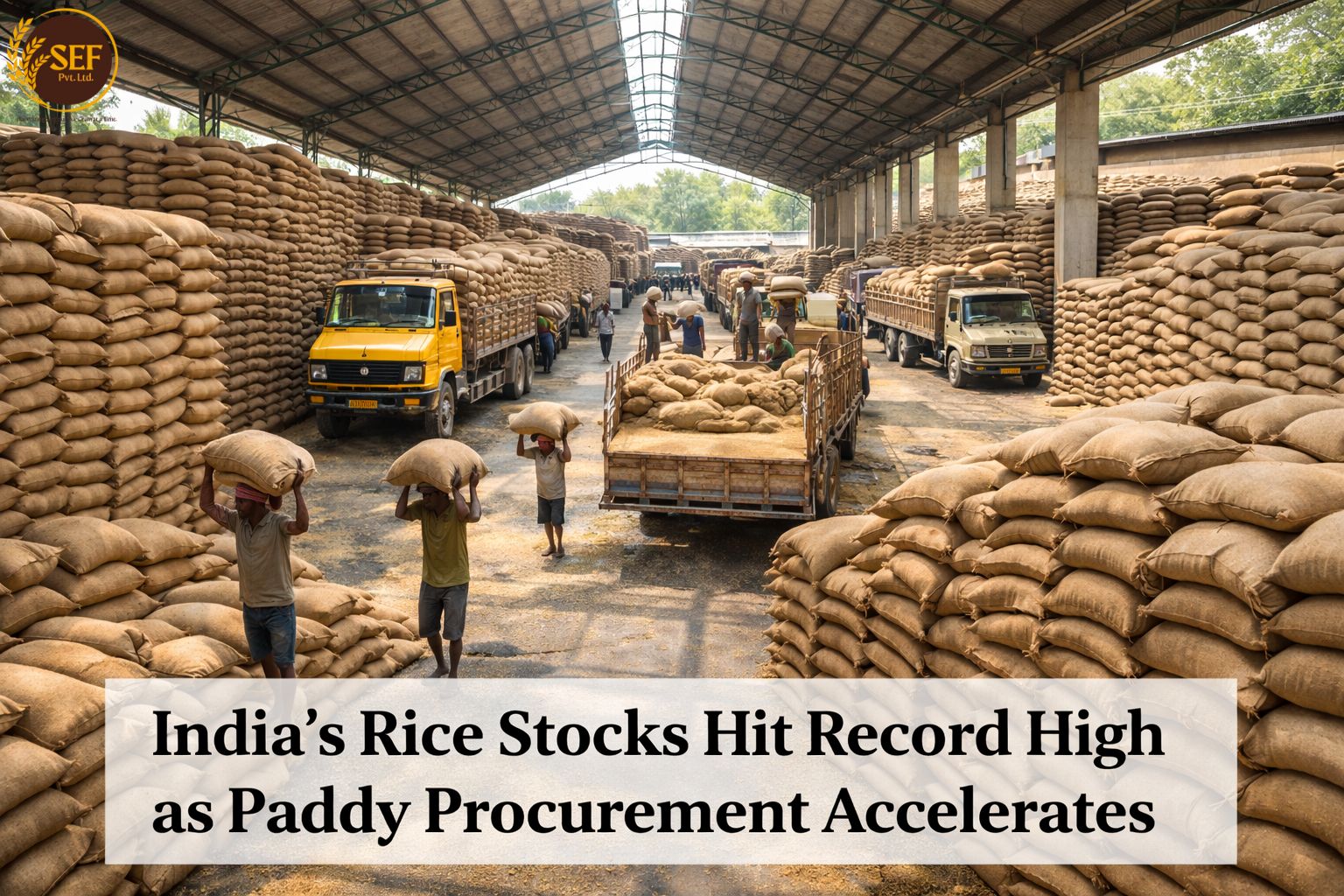
India’s rice inventories have surged to an all-time high, reflecting strong paddy procurement during the ongoing marketing season. According to official data, government-held rice stocks, including unmilled paddy, increased nearly 12% year-over-year to 57.57 million metric tonnes as of December 1, far exceeding the buffer requirement for the start of 2026.
This sharp rise comes as state agencies increased purchases from farmers amid open market prices remaining below the minimum support price (MSP). As a result, procurement activity has remained robust since the new season began on October 1.
Procurement Strengthens Domestic Supplies
Since the start of the 2024–25 marketing year, authorities have procured over 42 million tonnes of paddy, ensuring ample availability in government warehouses. Meanwhile, wheat stocks have also improved, standing at 29.14 million tonnes, compared with 20.6 million tonnes a year earlier.
Because of these healthy reserves, India is better positioned to manage domestic food security while monitoring rice prices in India more effectively.
Export Outlook Improves Amid Ample Stocks
Although global demand has remained moderate in recent weeks, traders indicate that the weaker rupee has improved export competitiveness. India, which contributes nearly 40% of global rice exports, has already removed all remaining export restrictions earlier this year.
As a result, rice shipments during the first ten months of 2025 increased sharply, crossing 18 million tonnes, with further growth expected. The abundance of stocks could allow India to expand exports further, influencing global supply dynamics and strengthening the position of the top 10 rice exporters in India in international markets.
Market Implications
High inventories may help stabilize domestic markets while giving policymakers greater flexibility in export planning. At the same time, global competitors may face pressure if Indian shipments continue to rise steadily.