

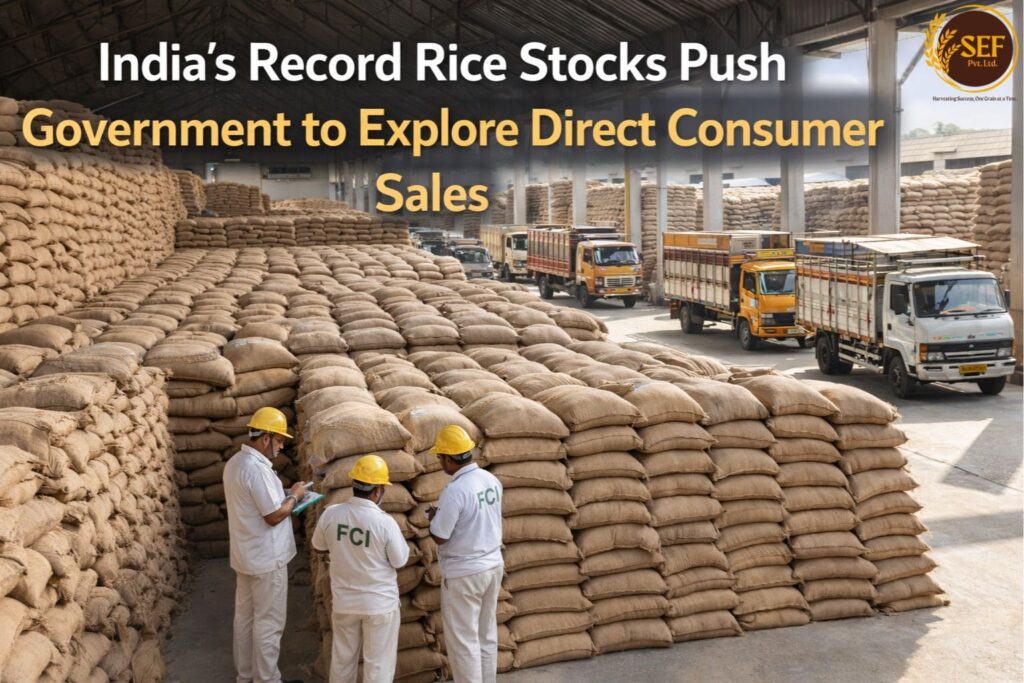
India is facing an unprecedented rice surplus as government reserves continue to rise sharply. According to official data available as of January 1, the Food Corporation of India (FCI) held 309.38 lakh tonnes (lt) of rice, up 6% from last year. Paddy stocks climbed 16% to 552.15 lt, while wheat reserves surged 49% to 274.63 lt.
The combined paddy stock in the Central Pool now equals nearly 370 lt of rice, taking total rice reserves to 679.32 lt. This volume is far above the buffer requirement and has intensified concerns over storage and disposal.
Pressure Builds to Reduce Surplus
India’s annual rice requirement under the Public Distribution System (PDS) stands at around 410 lt. With demand growth slowing, the government must urgently offload excess grain to prevent rising carrying costs.
Current rice stocks, including paddy, are nearly nine times higher than the buffer norm of 76.1 lt for January. Wheat reserves also remain almost double the required level. These figures underline the scale of surplus facing policymakers.
Ethanol Sales and Open Market Options
To ease pressure, the government has already allocated 52 lt of rice for ethanol production. Sales began in November at a discounted rate of ₹23,200 per tonne, well below the estimated economic cost of ₹41,733 per tonne.
Authorities have also encouraged grain-based ethanol plants to increase rice usage to boost offtake from FCI depots. Despite these measures, disposal avenues remain limited.
Limited Policy Choices Ahead
Experts believe that raising PDS entitlements or expanding retail sales through partners may offer only temporary relief. A former senior FCI official said stronger coordination between procurement policy and crop diversification is essential to manage long-term surplus.
As of March 31, 2025, FCI’s covered storage capacity stood at 872.22 lt, including facilities operated by state agencies. Even so, delayed rice lifting from millers and rising unmilled paddy stocks continue to strain storage systems.
Market Impact and Outlook
Open Market Sale Scheme (OMSS) volumes also declined during April–December, reflecting weaker demand from institutional buyers. This trend may influence Indian rice prices in the coming months.
With surplus supplies weighing on domestic markets, India’s position among the top 10 rice exporters in India will remain crucial in balancing internal stocks and overseas demand.