

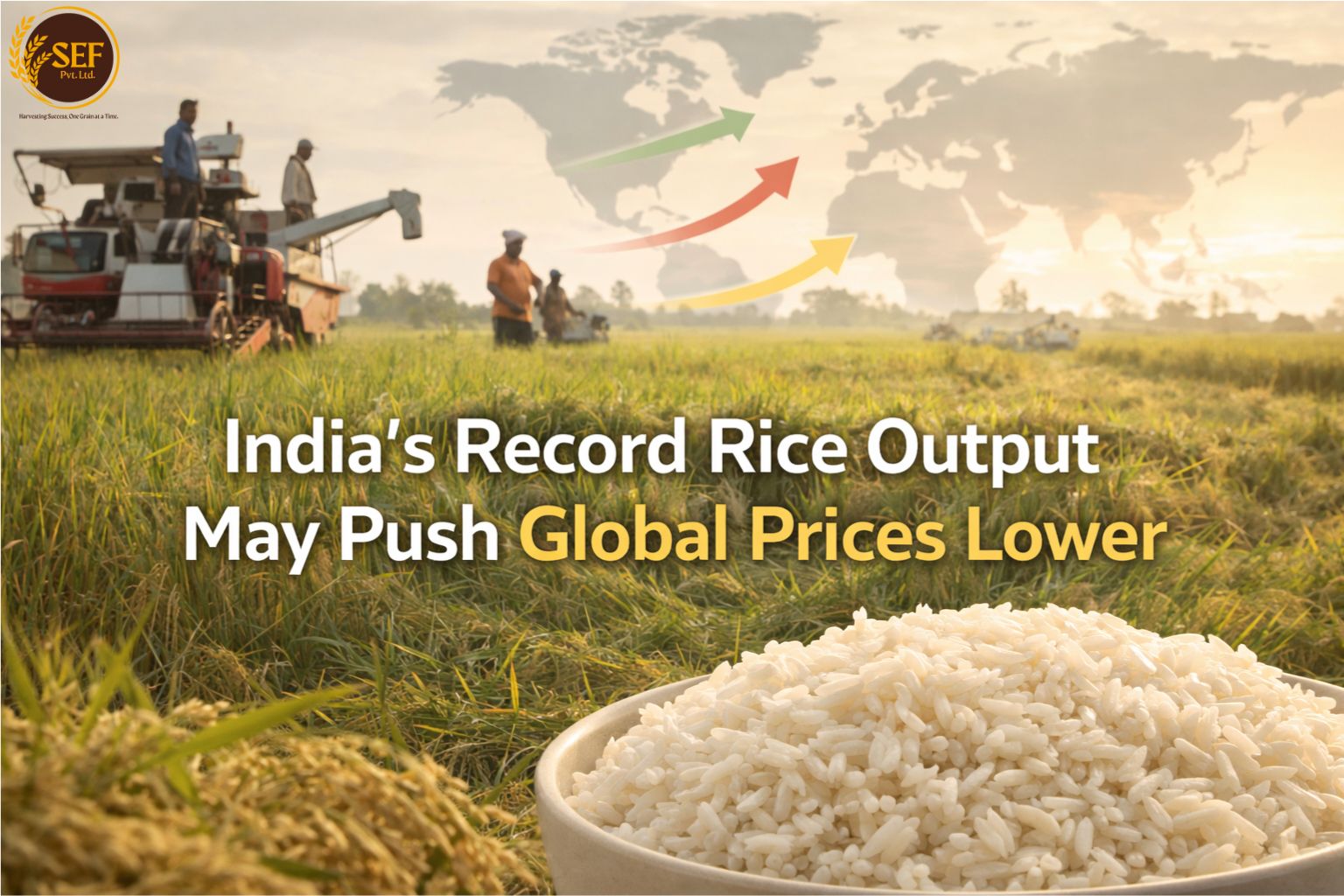
India is set to harvest another record rice crop, increasing pressure on already weak global prices. As fresh supplies enter the market, exporters may face tougher competition and shrinking margins.
According to official estimates, India’s monsoon-sown rice output for the 2025–26 season has reached a historic high of 124.5 million tonnes. The crop was planted during June and July and benefited from favorable weather conditions.
Surplus Supply Weighs on Indian Rice Prices
The large harvest has created a surplus at home. As a result, Indian rice prices could decline further in the coming months. Market participants expect prices to fall by $15–$25 per tonne by March or April, depending on export demand.
At the same time, buyers from Africa and the Middle East remain cautious. Many importers are delaying purchases, hoping for lower prices. This trend is forcing Indian exporters to stay flexible to protect volumes.
Global Market Faces Growing Pressure
Asia’s benchmark rice prices have already shown volatility. Prices dropped more than 4% in the past week, following recent gains from multi-year lows. Import curbs by major buyers such as the Philippines and Indonesia have added to the pressure.
Meanwhile, global rice production is forecast to reach 558.8 million tonnes in 2025–26, according to international estimates. Rising output across key producing nations could push global stockpiles to record levels.
India’s Export Role Remains Crucial
Despite near-term price weakness, India continues to play a central role in global rice trade. The country remains one of the top 10 rice exporters in India, supplying a wide range of markets across Asia, Africa, and the Middle East.
Going forward, price trends will depend on how quickly surplus stocks are absorbed and whether global demand improves. Until then, exporters may face continued pressure in a well-supplied market.