

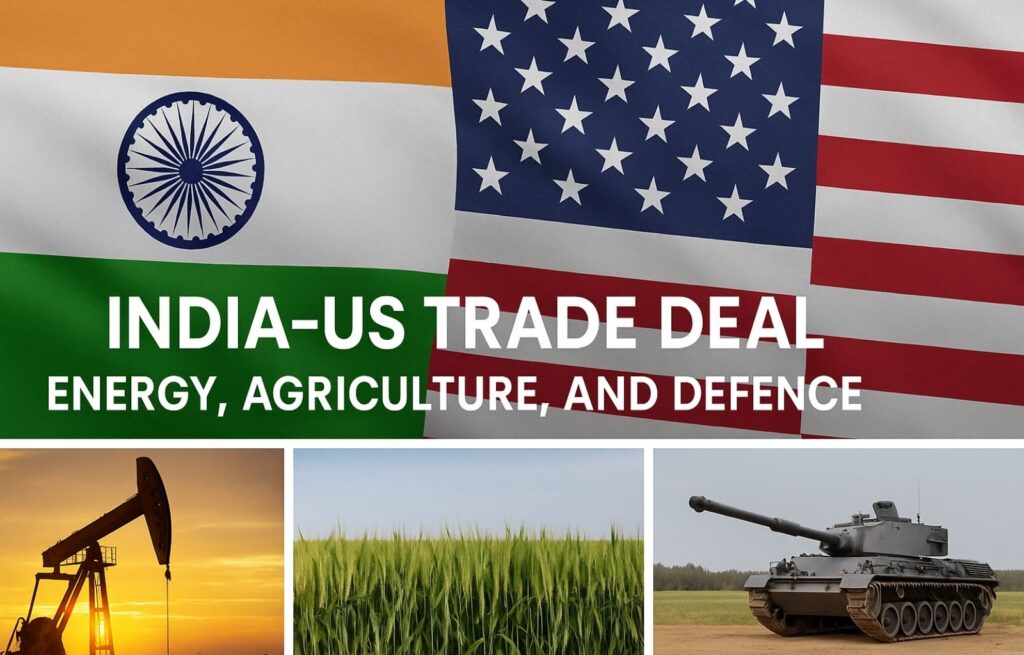
India and the United States are nearing the conclusion of a landmark bilateral trade agreement that could redefine their economic relationship. Across strategic sectors such as energy, agriculture, defence, and digital trade. The deal, unofficially referred to as the Bilateral Trade Agreement (BTA), is expected to be finalized by early July 2025, with negotiations progressing steadily despite earlier tariff disputes.
Bilateral Trade Could Touch $500 Billion by 2030
Trade between India and the US reached $131.84 billion in FY25, cementing the United States’ position as India’s largest trading partner. With both governments targeting $500 billion in two-way trade by 2030, the proposed deal is a crucial stepping stone.
The agreement is designed to improve market access, reduce tariffs, and foster long-term cooperation in high-growth markets. The Areas such as liquefied natural gas (LNG), defense manufacturing, and e-commerce regulation.
ALSO READ: India’s Basmati Exports Up ₹1,923 Cr in FY 2024–25
Energy and Agriculture at the Core of the Deal
India’s energy needs continue to surge, and the US is positioned to play a major role as a long-term LNG supplier. LNG, known for its stable pricing and cleaner profile, fits into India’s evolving energy security strategy. CRISIL, a leading Indian credit rating agency, has identified LNG as a cost-effective alternative to crude oil in the long term.
On the agricultural front, India is expected to increase imports of select US commodities such as walnuts, cranberries, and pistachios. However, broader market liberalization in agriculture remains a contentious issue for Indian policymakers, who are wary of disrupting the domestic farm sector.
Digital Trade and Customs Cooperation Advance
The deal also addresses modern trade issues, including digital trade frameworks, data privacy, and technical standards. Negotiators have made notable progress in streamlining customs procedures and aligning digital trade policies with global best practices.
India has expressed interest in securing equitable terms in data handling and e-commerce, resisting overly restrictive frameworks that could impact its growing digital economy.
ALSO READ: India’s Rice Production Forecast to Hit Record 151 MT in 2025–26
Defence Cooperation to Expand Under INDUS-X
India and the US already share close defense ties under the INDUS-X initiative launched in 2023. The new trade agreement is likely to deepen collaboration further, with prospects for co-development of defense technologies, increased US defense exports to India, and joint research in strategic sectors.
In addition, India continues to promote indigenous defense manufacturing, although it remains a large importer of weapons and security systems.
Impact on Indian Exports and Key Sectors
While the deal is expected to benefit US exporters in sectors like energy and agriculture, Indian exports could see gains in both traditional and emerging areas. CRISIL has highlighted potential growth in labour-intensive sectors such as textiles, gems, and jewellery, as well as in pharmaceuticals and smartphones.
However, trade experts believe that the actual increase in Indian export volumes may be modest, as many Indian goods already enjoy duty-free access to the US market under existing trade arrangements.
ALSO READ: India Set to Become the World’s Largest Rice Producer in 2024–25
Tariff Disputes and Political Context
India’s average tariff rates are higher than those of the US, leading to past friction. The US imposed a 26% tariff on Indian goods in April 2025 but temporarily reduced it to 10% as a goodwill gesture during negotiations. The Indian Ministry of Finance noted that the BTA would help resolve several long-standing trade irritants.
Domestically, India’s exports to the US have shown resilience, rising from $14.17 billion in April–May 2024 to $17.25 billion in the same period of 2025, despite earlier tariff pressures.
A Broader Trade Strategy for India
While finalizing the India–US trade pact, India is simultaneously negotiating key agreements with the United Kingdom and the European Union. These moves reflect a broader strategic shift to diversify trade relationships and reduce dependency on any single partner.
With global trade realignments underway, India’s proactive stance is expected to help it maintain strong economic momentum and increase its share in global exports.
Conclusion
The proposed India–US trade agreement could become a turning point in bilateral relations, paving the way for increased cooperation in energy, agriculture, defence, and digital trade. While challenges remain, especially in agricultural liberalization and data governance, the ongoing momentum suggests a historic pact is within reach. A successful deal would reaffirm India’s position as a key global trade partner while strengthening economic and strategic ties with the United States.
ALSO READ: India Introduces New Tariff Rule for Rice Exports From May 1, 2025
📞 Have a Rice Export Inquiry?
For bulk rice export needs or the latest Indian rice prices, feel free to connect with Shah Enterprises, your trusted partner in global rice trade.
 Chat on WhatsApp