

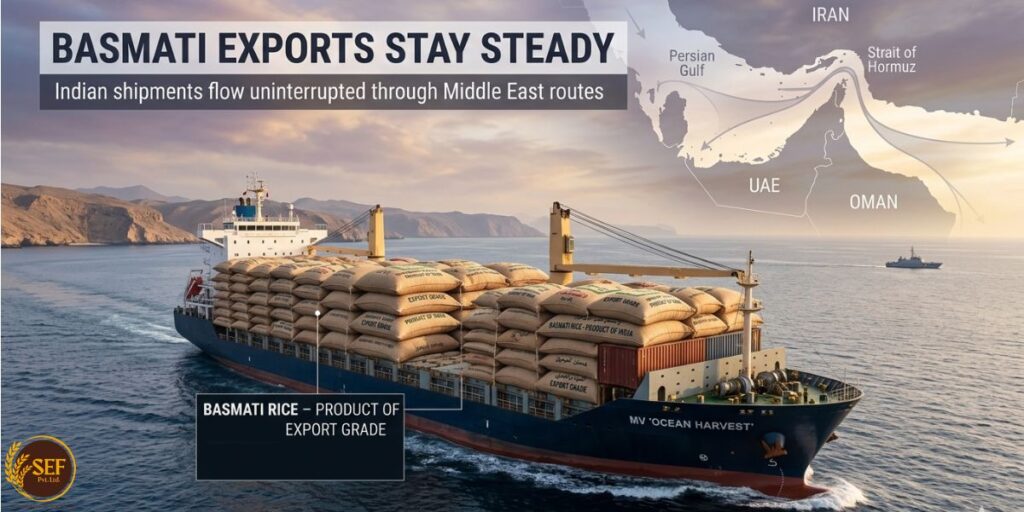
India’s basmati rice exports are expected to remain stable despite ongoing tensions in West Asia. While short-term disruptions may affect shipments to key markets, strong regional demand will likely support overall trade growth.
A recent industry analysis indicates that India could see a modest rise in basmati exports in FY26. Export volumes may cross 6 million tonnes, showing steady growth even amid geopolitical uncertainty.
Demand from Key Markets Offsets Iran Disruption
Shipments to Iran may slow due to ongoing logistical challenges. However, demand from other major buyers continues to remain strong.
Countries such as:
- Saudi Arabia
- Iraq
- United Arab Emirates
- Yemen
Are expected to compensate for the temporary decline in Iranian imports.
These markets rely heavily on basmati rice for daily consumption. As a result, they continue to import consistently to maintain food security.
Strait of Hormuz Remains a Key Risk Factor
The Strait of Hormuz plays a critical role in India’s rice export supply chain. Any disruption in this route can delay shipments and increase transit time.
Exporters are already exploring alternative shipping routes to reduce risk. However, longer routes may increase freight costs and delivery timelines.
If disruptions continue for a month, trade volumes could decline slightly. Still, the overall impact may remain limited due to diversified demand.
Export Value and Market Share Stay Strong
India exported basmati rice worth nearly $6 billion in FY25. The country continues to dominate the global basmati market with an estimated 85% share.
Meanwhile, Pakistan remains the only major competitor in this segment.
Exports account for nearly two-thirds of India’s basmati rice sales. Therefore, global demand plays a crucial role in supporting farmer income and industry growth.
Working Capital Pressure May Increase
Logistical challenges may stretch the working capital cycle for exporters. Several factors are contributing to this pressure:
- Limited vessel availability
- Longer shipping routes
- Delayed payments from buyers
As a result, exporters may need higher short-term financing to maintain operations.
Exporters Likely to Pass on Rising Costs
Freight and insurance costs have started to rise due to regional instability. However, exporters are expected to pass these costs on to buyers.
This strategy will help protect profit margins and maintain business sustainability. At the same time, global demand remains strong enough to absorb moderate price increases.
This trend may also influence Indian rice prices in international markets.
Impact on Export Rice from India
Despite short-term disruptions, the long-term outlook for export rice from India remains positive.
India exports rice to more than 140 countries across:
- Asia
- Middle East
- Europe
- United States
Its strong supply base, quality advantage, and competitive pricing continue to support global demand.
Outlook: Stability with Cautious Optimism
India’s basmati rice sector shows resilience despite geopolitical challenges. While risks remain in the short term, diversified markets and steady demand offer strong support.
Exporters are adapting quickly by adjusting logistics and contract strategies. If conditions stabilize, the industry may return to stronger growth momentum.