
Afghanistan’s demand for premium and affordable Indian rice continues to rise every year. Importers, wholesalers, retailers, and distributors prefer Indian basmati and non-basmati due to aroma, grain length, consistency, and price stability. Indian exporters also offer competitive pricing, fast delivery, flexible packaging, and reliable quality checks, making India the top rice supplier for Afghanistan.
In this guide, you’ll find everything you need to know before importing: varieties, grades, pricing trends, packaging options, required documents, and a smooth step-by-step import process.
Afghanistan continues to depend heavily on Indian rice for Afghanistan, especially premium long-grain basmati and affordable non-basmati categories. From Kabul to Herat, rising consumption in restaurants, hotels, and households has increased basmati rice Afghanistan demand faster than in previous years. Afghan consumers trust Indian rice for its aroma, purity, cooking consistency, and pocket-friendly pricing.
India’s strong supply chain and production capacity make it the top source for Afghan wholesalers who regularly export rice from India to Afghanistan. Many mills that export rice from India to Middle East and CIS countries also supply the Afghan market, ensuring steady availability even during high-demand seasons like Ramadan and winter.
Urban centers such as Kabul and Mazar-e-Sharif prefer premium basmati, while smaller towns rely heavily on budget non basmati rice Afghanistan due to affordability. However, the diversity of Indian rice makes it suitable for all segments, helping India strengthen its Indian rice market share in Afghanistan.
Afghan buyers are both quality-conscious and price-sensitive, which is why India’s wide range perfectly matches market needs for basmati varieties for Afghanistan and high-volume non-basmati options.
Indian basmati has unmatched demand among Afghanistan basmati rice importer groups.
Non-basmati dominates bulk shipments and large-scale tenders, significantly supporting non-basmati rice export to Afghanistan.
Further, because Afghanistan imports both premium and economical varieties, India remains strong among the top rice exporter companies in the world.
Below is the latest indicative export pricing, based on broken %, grain length, moisture level, and current rice prices in India. Rates may vary slightly depending on packaging and port loading schedules.
| Rice Variety | Price (Per Ton) | Suitable For |
|---|---|---|
| 1121 Basmati Rice | ₹70,000 – ₹105,000 | Premium buyers, top hotels, restaurants |
| 1509 Basmati Rice | ₹60,000 – ₹90,000 | Retail chains, supermarket sales |
| 1718 Basmati Rice | ₹70,000 – ₹80,000 | Mid-premium buyers, restaurants |
| Sugandha Basmati Rice | ₹50,000 – ₹70,000 | Retail demand, household use |
| Pusa Basmati Rice | ₹50,000 – ₹70,000 | Aroma-based buyers, mixed markets |
| IR64 Parboiled | ₹30,000 – ₹38,000 | Bulk importers, economy segments |
| Sona Masoori | ₹40,000 – ₹48,000 | Household and retail sales |
| PR11 / PR14 | ₹35,000 – ₹50,000 | Budget wholesalers, high-volume imports |
In addition, importers working with suppliers who frequently export rice from India to Afghanistan get better pricing stability due to long-term contracts and predictable supply.
Choosing the best Indian rice for Afghanistan depends on your target consumer segment:
Furthermore, these trends support India’s strong position among the top 10 rice exporters in India and its global leadership among the top rice exporter companies in the world.
Packaging plays a key role in market appeal and trust. Importers prefer durable, moisture-proof, and visually attractive packaging customized for rice packaging for Afghanistan.
Many mills offering import Indian rice Afghanistan shipments provide packaging in English, Arabic, Dari, and Pashto, improving brand penetration.
This section focuses purely on importer-side expectations. Your export process is already covered in a separate guide. Moreover, Afghan buyers follow strict parameters to ensure consistency and value.
Buyers usually inspect:
Additionally, large distributors often verify if the supplier ranks among top rice exporters in India, since this ensures reliability and strong bulk-handling capabilities. As a result, this acts as a practical Afghanistan rice buyer guide for new traders entering the market.
According to Afghanistan rice import data, the country imports thousands of metric tons every month. Non-basmati varieties like IR64 and PR11 dominate because they offer the best-value pricing. Urban markets increasingly prefer premium basmati due to rising income and changing preferences.
Furthermore, Afghan wholesalers usually increase procurement before Ramadan, winter, and wedding seasons, in order to avoid supply gaps and fluctuating rice prices in India. Therefore, India’s stable export ecosystem ensures Afghanistan continues to rely heavily on Indian mills, strengthening India’s global position in the rice trade.
Indian rice offers powerful advantages for Afghan imports, strengthening the top benefits of buying Indian rice.
Additionally, experienced exporters supplying Africa, CIS, and Middle East markets often act as premium rice supplier India, which further increases confidence among Afghan buyers.
With hundreds of mills in India, Afghan buyers should follow this checklist before onboarding a supplier:
Similarly, many traders prefer working with suppliers listed among the top 10 rice exporters in India. This allows them to avoid delays and maintain reliable supply chains. Overall, it ensures buyers can confidently buy Indian rice wholesale in Afghanistan without facing quality challenges.
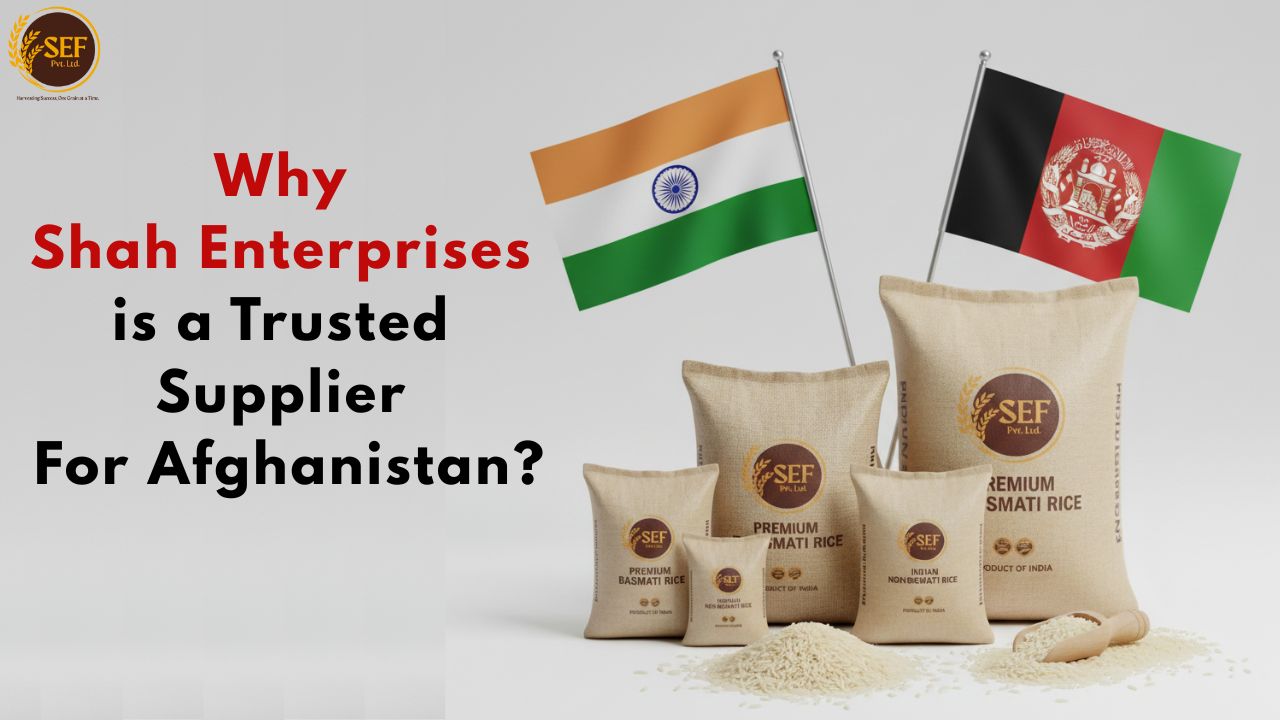
Shah Enterprises is recognized widely as a dependable Indian rice supplier Afghanistan, supplying both premium and economical rice categories.
Furthermore, with growing volumes and regional experience, Shah Enterprises is becoming a preferred name among Afghan wholesalers searching for the best rice to export to Afghanistan.
Afghanistan’s rice demand continues to rise, and Indian rice remains the top choice due to aroma, grain length, and price competitiveness. Whether importers want premium 1121, mid-range 1509, or economical IR64 and PR11, India offers unmatched quality.
This guide covers everything importers need from varieties, price trends, packaging, and quality checks, making it the most complete resource for anyone planning to import Indian rice from Afghanistan.
Looking for the best quality basmati and non-basmati rice for Afghanistan? Shah Enterprises offers premium grading, competitive pricing, and fast loading for all Afghan buyers. Contact us today for 2025 updated rates, samples, and bulk order support.
Shah Enterprises delivers premium Basmati and Non-Basmati rice to Afghanistan with competitive pricing, fast loading, and reliable export support.
Afghanistan mainly uses long-grain non-basmati rice like IR64 and PR11 for daily cooking. However, premium basmati rice is popular in cities for pulao, biryani, and special dishes.
Rice prices in Afghanistan vary by quality and season. On average, Indian IR64 and PR11 remain the most affordable, while 1121 basmati sells at higher premium rates.
Yes, Afghanistan grows some rice domestically, especially in the northern and eastern provinces. However, production is limited, so the country imports large volumes from India to meet demand.
Popular Afghan rice types include Sela rice, long-grain non-basmati, and basmati varieties used for pulao and qabuli. Many households also prefer parboiled long-grain rice for everyday meals.
For Afghanistan, the best export choices are 1121 basmati, 1509 basmati, IR64 parboiled, PR11, and Sona Masoori. These varieties offer consistent quality, strong aroma, and stable pricing for buyers.
