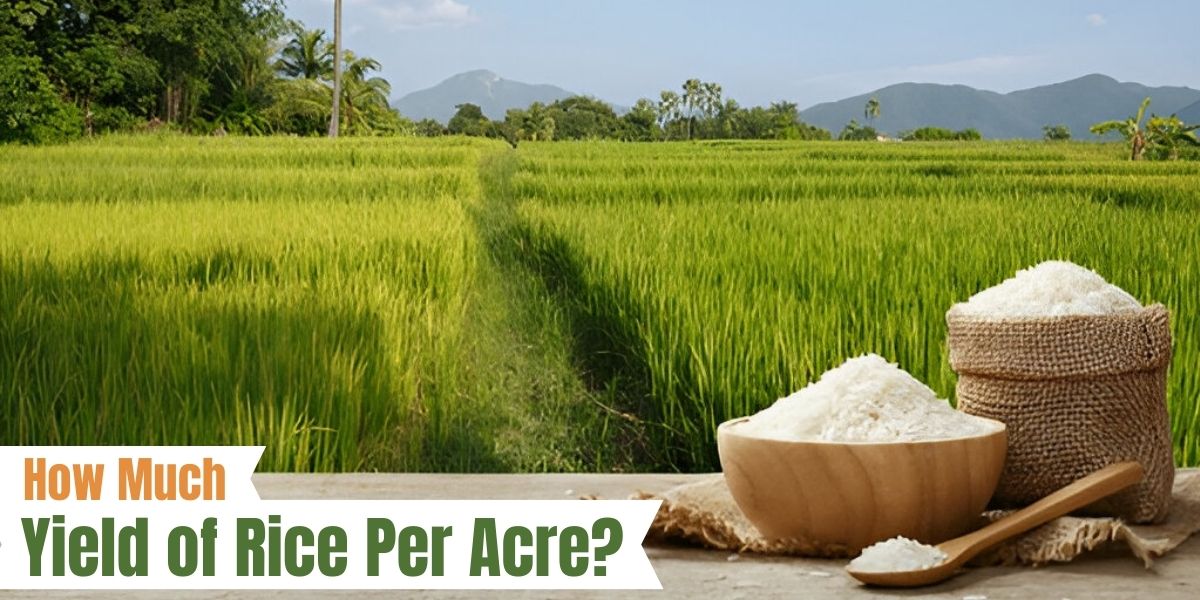
Rice yield per acre directly impacts the income of Indian farmers and the nation’s economy. India is the largest producer of rice globally and a major exporter. Further, to ensure ahigh yield,efficient ricefarmingtechniques,improvedseedquality,andfavorable environmental conditionsarenecessary. The top rice exporting countries are always on the lookout for better quality rice from India, so improving rice yield directly influences both domestic consumption and export growth.
Average Rice Paddy Yield Per Acre in India
India’s paddy yield per acre ranges from 1.8 to 2.5 tonnes (1,800 to 2,500 kg), depending on factors such as region, rice variety, and farming practices. Furthermore, with modern techniques and proper inputs, this number can be significantly improved.
In order to improve rice yield per acre, it is necessary to understand the following key influencing factors:
Soil Quality
There is a direct correlation between soil fertility and pH levels and rice productivity. Additionally, well-drained loamy soils with good water-holding capacity are ideal for paddy cultivation.
Seed Quality
Using certified, disease-free, and high-yield seed varieties ensures better germination and plant vigor.
Irrigation Methods
Efficient water management through flood irrigation, drip irrigation, or alternate wetting and drying (AWD) methods can optimize water usage while maintaining yields.
Weather Conditions
Temperature, rainfall, and sunlight during the growth stages greatly impact the outcome. Climate-smart agriculture techniques can mitigate weather risks.
Pest and Disease Control
Integrated pest management (IPM) and timely disease control protect crop health and increase rice production per acre.
Improving Rice Yield: Best Practices
Here are some tested practices for maximizing rice yield:
Use of organic manure and balanced fertilizers (NPK application based on soil test).
Proper sowing time aligned with regional weather patterns.
Spacing and planting depth to avoid overcrowding.
Timely weeding and pest control to reduce competition and crop stress.
Technology and Modern Farming Techniques
Adopting modern tools and technology significantly boosts average paddy yield:
Direct Seeded Rice (DSR) reduces water usage and labor cost.
Precision farming for data-driven decision-making.
Drones and sensors for crop monitoring.
Tractors and transplanters to improve operational efficiency.
Regional Yield Differences Across India
Rice yield differs from state to state due to climatic and geographical diversity:
State
Average Yield (Tonnes/Acre)
Punjab
2.8 - 3.2
Haryana
2.5 - 3.0
West Bengal
2.0 - 2.5
Uttar Pradesh
1.8 - 2.3
Tamil Nadu
2.2 - 2.8
Comparison: India vs. Other Countries
Compared to India, countries like China and the USA often achieve higher yields per acre due to:
Extensive use of hybrid seeds
Mechanization
Larger landholdings
Higher investment in agri-research
Rice Yield Comparison
Country
Avg. Yield (T/Acre)
China
3.5 - 4.2
USA
3.0 - 3.8
India
1.8 - 2.5
How Yield Affects Export Quality and Quantity?
Rice yield differs from state to state due to climatic and geographical diversity:
Export Quality
Longer maturity period = more aroma
Broken Rice %
Lower in crops with better agronomy practices
Profit Margins
Directly tied to yield per acre and processing efficiency
Conclusion
To increase rice yield per acre, Indian farmers must adopt region-specific, technology-supported, and environmentally friendly practices. Choosing high-paddy-yield rice varieties, improving soil health, and utilizing modern equipment are crucial steps. By focusing on enhancing rice production per acre and boosting the yield of paddy per acre, farmers can significantly increase their farm output. India, as the largest producer of rice in India, continues to benefit from these advancements, strengthening its agricultural economy and supporting global rice demand.
The rice yield per acre typically ranges between 20 to 35 quintals under standard farming conditions, with higher yields possible through modern techniques.
The income from 1 acre of paddy farming varies, but generally farmers can expect profits between ₹30,000 to ₹70,000, depending on input costs and paddy variety.