

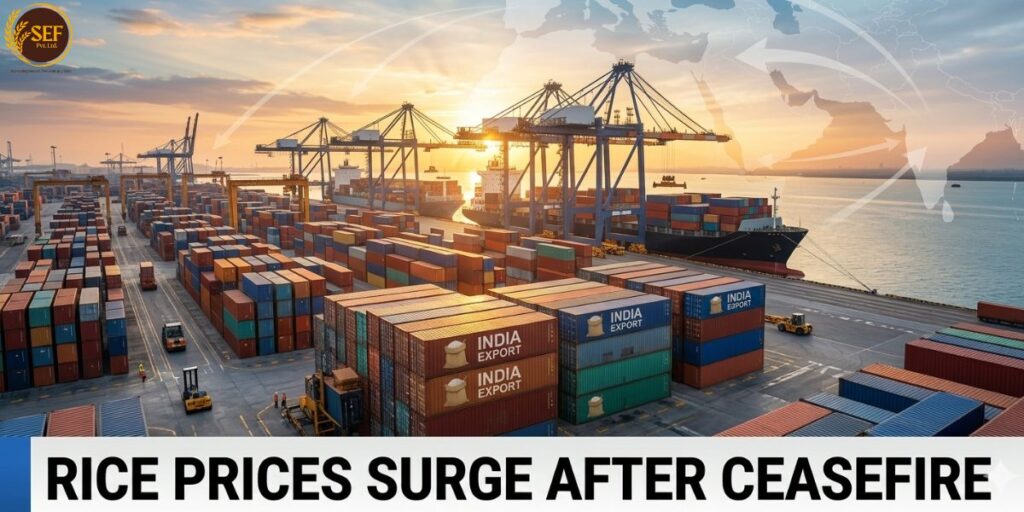
India’s rice market has turned bullish again. Wholesale rates have risen sharply after a ceasefire between the United States and Iran improved trade sentiment.
Exporters quickly resumed shipments to key markets in West Asia. As a result, Indian rice prices increased by up to 7% in just two days.
Export Demand Surges After Ceasefire
The ceasefire has eased geopolitical tensions. This shift has encouraged buyers from the Middle East and the US to place fresh orders.
Exporters who had paused shipments during the conflict are now preparing to dispatch consignments. The recovery comes after a sharp decline of nearly 6% in prices during the disruption phase.
This sudden rebound highlights how sensitive export rice from India remains to global events.
Retail Prices Likely to Rise Soon
Market experts expect the wholesale price increase to reach consumers shortly. Retail markets usually follow wholesale trends with a slight delay.
Traders believe consumers may see higher prices within the next two weeks. Strong export demand continues to push supply toward international markets.
Shipments Resume from Key Ports
Exporters have already positioned containers at major ports such as:
- Mundra Port
- Kandla Port
Shipments are expected to restart immediately. Both basmati and non-basmati rice will move toward West Asian destinations.
This rapid movement signals strong recovery in export activity.
Previous Disruptions Had Hit Trade Hard
The recent price rise follows a difficult phase for exporters. The earlier conflict had disrupted maritime routes and delayed shipments.
Around 400,000 tonnes of basmati rice remained stuck at ports or in transit. This backlog affected delivery schedules and cash flow cycles.
In addition, payment issues created further stress. Exporters faced delays due to banking and settlement challenges, especially in Iran-linked trade.
Outstanding payments between ₹2,000 and ₹2,500 crore are still pending.
Positive Sentiment Returns to Rice Trade
The ceasefire has improved confidence across the industry. Exporters are now optimistic about clearing pending orders and securing new deals.
Buyers from West Asia have resumed inquiries. Demand from countries such as United Arab Emirates, Saudi Arabia, and Iraq remains strong.
This renewed demand supports both export volumes and pricing.
What does this mean for Indian Rice Market?
The current situation may create both opportunities and challenges:
- Rising exports may tighten domestic supply
- Wholesale gains could push retail prices higher
- Exporters may recover earlier losses
- Payment risks still remain in select markets
Overall, the market has entered a recovery phase. However, stability in global trade routes will remain crucial.