

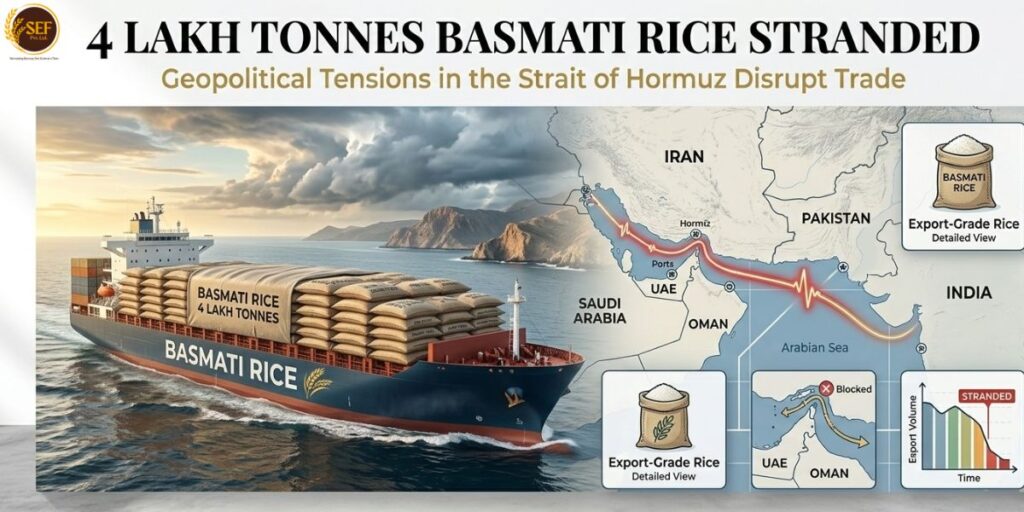
Escalating tensions involving Iran and the alliance between the United States and Israel are beginning to affect global trade routes. One of the earliest sectors feeling the pressure is India’s basmati rice export industry.
Industry estimates suggest that nearly 4 lakh tonnes of basmati rice shipments are currently stranded. Some consignments remain stuck at international ports, while others are still in transit. Exporters fear that continued uncertainty could delay payments and increase financial pressure across the supply chain.
India remains the largest exporter of basmati rice in the world. However, geopolitical instability in West Asia now threatens a major portion of this trade.
Shipping Disruptions Slow Down Export Activity
Export movement has slowed sharply in recent weeks. Shipping companies have increased war-risk surcharges and adjusted cargo routes. As a result, exporters now face higher freight costs and longer delivery timelines.
Many shipments have stopped mid-route because vessels are avoiding sensitive maritime corridors in the Middle East. Consequently, traders report delays in loading schedules and cargo departures.
These disruptions affect the entire export ecosystem. Millers, traders, and logistics companies are already dealing with operational uncertainty.
Middle East Remains Key Market for Indian Basmati
The Middle East accounts for a large share of India’s basmati rice exports. Key importers include:
- Iran
- Saudi Arabia
- Iraq
- United Arab Emirates
- Yemen
Together, these countries account for nearly 50 percent of India’s basmati export market.
Therefore, even short-term disruptions in the region can significantly affect export volumes and market stability.
Domestic Market Begins to Feel the Impact
The slowdown in exports has already started influencing Indian rice prices in domestic markets.
Traders across major mandis report falling basmati rates. In several markets, prices have dropped by up to ₹1,000 per quintal.
Popular varieties facing disruptions include:
- Basmati 1121
- Basmati Sela 1509
- Sugandha
- Sharbati
Lower export demand has increased supply within the domestic market. As a result, mandi prices have started to decline.
Export Activity Slows in Key Producing Regions
The impact is also visible in several rice-producing districts across central India. Export hubs in Madhya Pradesh have reported a noticeable slowdown in orders.
Districts such as Raisen and Narmadapuram are known for exporting large quantities of basmati rice. Exporters in these regions say the current situation has increased operational costs and complicated shipment planning.
Higher insurance premiums, additional taxes, and rerouted vessels have pushed export costs significantly higher.
Rising Logistics Costs Add Pressure
Shipping companies have raised container charges and introduced war-risk tariffs. Exporters report that freight expenses have nearly doubled in some cases.
Previously, container costs averaged around $1,800. However, recent estimates suggest rates have increased to almost $3,800 per container.
These additional expenses have increased the export price of basmati rice by roughly ₹8 to ₹10 per kilogram.
Furthermore, some vessels have redirected shipments to alternative ports due to security concerns. This rerouting increases both transportation costs and delivery time.
Payment Delays Create Financial Stress
Another major concern for exporters is delayed payments. Several shipments have reached ports but remain uncollected by buyers.
Traders report communication gaps with overseas buyers as uncertainty continues. This situation has created cash-flow challenges for exporters and millers who rely on timely international payments.
Industry participants warn that prolonged disruptions could strain the financial stability of smaller exporters.
Industry Hopes for Temporary Disruption
Despite the current challenges, many traders believe the situation may not last long. Exporters expect shipments to resume once maritime routes stabilize and geopolitical tensions ease.
Some industry observers remain optimistic that stalled consignments will eventually reach their destinations. If trade routes reopen quickly, demand from Middle Eastern markets could recover.
For now, however, exporters remain cautious and continue to monitor developments closely.