
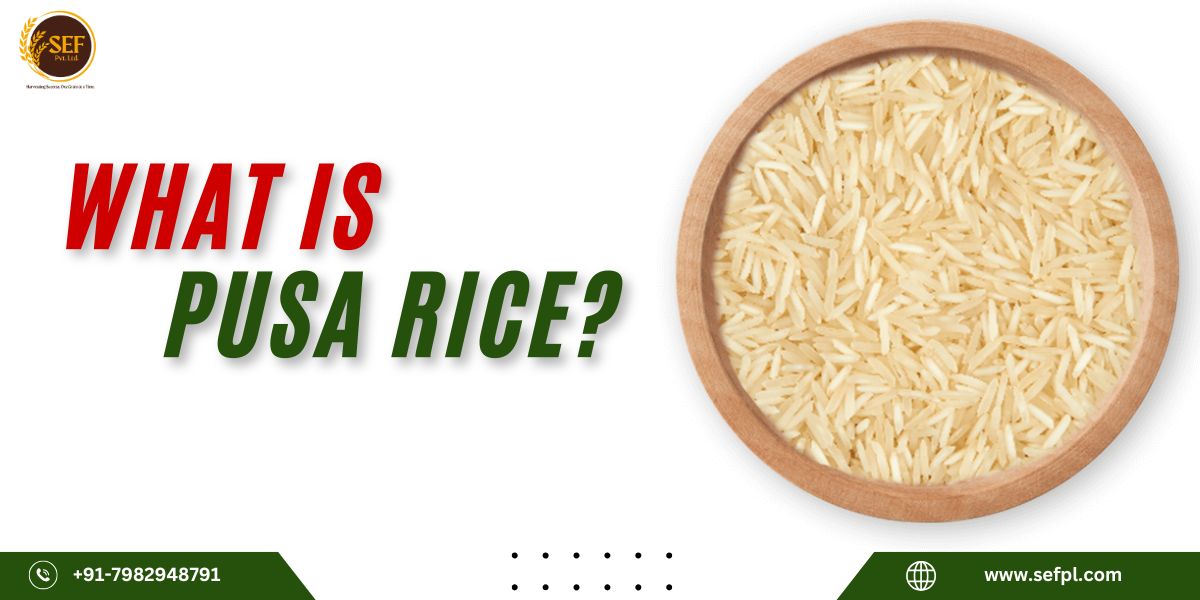
India has been globally recognized for producing some of the finest rice varieties in the world, with Basmati rice being its most celebrated type. Known for its long grains, unique aroma, and rich taste, Basmati has become a symbol of India’s agricultural excellence and culinary heritage. Among the modern innovations within this category, Pusa Basmati Rice has gained remarkable attention for combining tradition with scientific advancement.
Developed through years of research and breeding improvements, Pusa Basmati Rice represents India’s move toward sustainable and high-yield farming. This variety not only caters to domestic demand but also contributes significantly to the country’s growing rice export market. Today, India remains the leading player when it comes to export rice from India, offering unmatched quality to global buyers.
Pusa Basmati Rice is a hybrid variety of traditional Basmati rice developed by the Indian Agricultural Research Institute (IARI), also known as the Pusa Institute. This variety was introduced to enhance the productivity, grain quality, and disease resistance of traditional Basmati varieties while maintaining their signature aroma and flavor.
Pusa Basmati has become one of the most preferred choices among farmers and exporters due to its excellent yield potential, shorter maturity duration, and adaptability to different agro-climatic conditions. Its grains are slender, extra-long, and non-sticky when cooked qualities that make it highly desirable in international markets.
The journey of Pusa Basmati began at IARI, New Delhi, where scientists worked to develop a variety that would offer both high yield and traditional characteristics. Through selective cross-breeding of fine-quality traditional Basmati with high-yielding lines, several improved versions were created.
The first breakthrough came with Pusa Basmati 1, followed by advanced versions like Pusa Basmati 1121, Pusa Basmati 1509, Pusa Basmati 1718, and others. Each subsequent variety was developed to address specific issues such as disease resistance, shorter crop duration, or improved grain quality.
This innovation not only boosted India’s domestic rice output but also strengthened its position among the top 10 rice exporting countries globally.
One of the most famous varieties, known for its exceptional grain length (over 8.3 mm after cooking) and natural aroma. It’s a preferred choice for exporting rice from India due to its visual appeal and cooking performance.
A short-duration variety that matures in around 115 days. It requires less water and offers high yield, making it popular among farmers. The grains are extra-long and aromatic, suitable for both domestic and export markets.
An improved version of 1121, offering better resistance to bacterial blight. It retains the same fragrance and grain quality while being more resilient in changing climatic conditions.
Known for its superior grain strength and uniform cooking quality, Pusa 1637 is favored by exporters targeting high-end international markets.
A recently developed variety that maintains the authentic aroma of traditional Basmati while offering excellent yield and short maturation time.
Each of these varieties has played a crucial role in India’s journey as a global leader in rice exports and in strengthening its agricultural economy.
These attributes make Pusa Basmati a practical and profitable choice for both farmers and exporters.
| Feature | Pusa Basmati Rice | Traditional Basmati Rice |
|---|---|---|
| Grain Length | Longer (8.3+ mm) | Slightly shorter |
| Aroma | Strong and natural | Strong and traditional |
| Maturity Time | 110–120 days | 145–150 days |
| Water Usage | Lower | Higher |
| Yield | High | Moderate |
| Export Demand | Very High | High |
This balance between yield efficiency and authentic quality is the main reason Pusa Basmati has rapidly become a preferred choice for export markets.
The production of Pusa Basmati Rice is concentrated in the northern states of India, which are also part of the top 10 rice producing states of India. These include:
These states provide the ideal agro-climatic conditions necessary for the growth of long-grain aromatic rice.
India has established itself as a global hub for premium-quality rice exports, and Pusa Basmati has been a key contributor to this success. Exporters prefer it due to:
The variety’s adaptability and superior cooking qualities make it one of the top exported rice types under brands that appear in the top 10 rice exporters in India.
Pusa Basmati Rice has created a global footprint in markets such as Saudi Arabia, UAE, Iran, UK, USA, and Germany. Its ability to retain texture and fragrance makes it highly sought after by both households and hotels.
With India being the largest exporter of Basmati rice, this segment significantly contributes to the country’s export revenue. According to recent trade reports, India’s Basmati export continues to dominate the international market, reinforcing its position among the top 10 rice exporter companies in the world.
Furthermore, as global consumers become more conscious of premium and organic food choices, the demand for high-quality Indian rice varieties is expected to grow steadily.
The introduction of Pusa Basmati varieties has improved India’s agricultural sustainability by reducing water usage, shortening crop cycles, and improving farmers’ profitability. With ongoing government and institutional support, the rice export ecosystem in India continues to evolve toward global standards.
Additionally, rice prices in India remain competitive, allowing exporters to maintain cost-effective supply chains while ensuring high product quality for global buyers.
Exporting Pusa Basmati Rice requires adherence to stringent quality and hygiene standards. Reputed exporters follow international protocols, including:
This attention to quality ensures that Indian Basmati rice, particularly Pusa varieties, maintains its premium reputation in global markets.
With the continuous advancement in agri-biotechnology and sustainable farming practices, Pusa Basmati is set to strengthen India’s dominance in the global rice trade. The variety offers a perfect balance between traditional taste and modern agricultural needs.
The rise of innovative exporters and strong international partnerships has positioned India as a consistent supplier to the global market, particularly in high-demand regions such as the Middle East, Europe, and Africa.
Pusa Basmati Rice represents the perfect blend of India’s agricultural innovation and culinary heritage. Its consistent quality, superior yield, and adaptability have made it the most sought-after variety in both domestic and export markets.
As global demand for premium rice continues to rise, India’s strength as one of the top 10 rice exporters in India and among the top 10 rice exporting companies in the world will only grow stronger. The country’s competitive rice prices in India further support this momentum, ensuring that Pusa Basmati remains the preferred choice for consumers and importers worldwide.
