
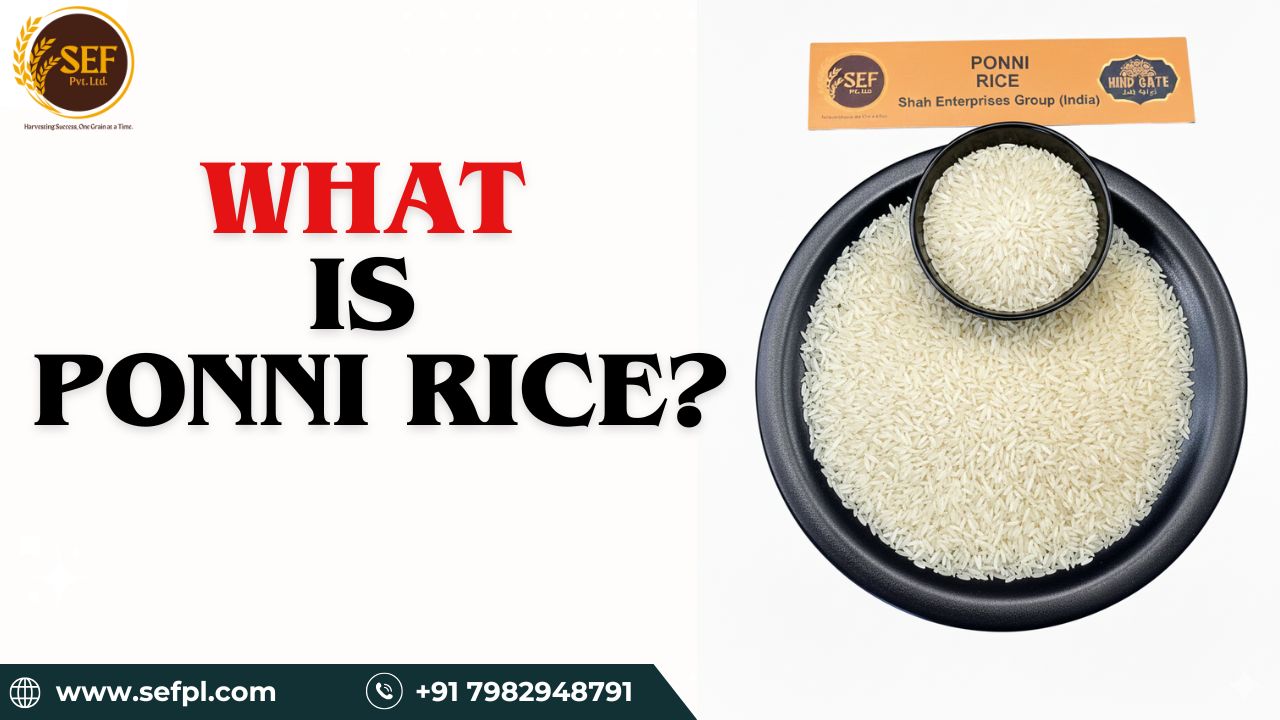
Ponni rice is one of South India’s most popular rice varieties, known for its soft texture, moderate glycemic index, and easy digestibility. It is widely consumed in Tamil Nadu, Karnataka, and Andhra Pradesh and is also exported to Southeast Asia, the Middle East, and African countries.
Originally developed by the Tamil Nadu Agricultural University, this high-yielding rice variety is designed to deliver better nutritional balance while preserving the traditional South Indian taste profile.
This updated 2026 guide explains what Ponni rice is, its benefits, nutrition facts, calories, glycemic index, side effects, and cooking methods.
Ponni rice is a medium-grain rice variety, available in both raw and parboiled forms. After cooking, it becomes soft, fluffy, and non-sticky, making it ideal for daily meals and South Indian dishes.
Historically, the name “Ponni” comes from the ancient name of the Kaveri River. Due to its moderate glycemic index, Ponni rice is often preferred for regular consumption and diabetic-friendly diets.
In comparison, premium long-grain rice like 1121 basmati is more expensive, while Ponni rice remains better suited for dishes that require a soft texture.
Yes, Overall, Ponni rice is considered a healthy choice when consumed in moderation, especially in its parboiled form.
In particular, its health benefits include the following:
This is why many nutritionists list Ponni rice among the top 10 types of rice consumed for everyday meals.
Moreover, here are the key health benefits supported by nutritional facts:
As part of a balanced diet, Ponni rice is low in fat and moderate in calories, making it suitable for controlled diets.
Additionally, its softer texture is easier for the stomach to process, making it ideal for children and older adults.
Parboiled Ponni has a slower glucose release, which helps manage sugar levels.
Provides steady energy throughout the day.
Idli, dosa, curd rice, lemon rice, and daily meals.
From a nutritional perspective, the values below explain why Ponni rice supports daily energy needs.
| Nutrient | Amount |
|---|---|
| Calories | 130–150 kcal |
| Carbohydrates | 28–32 g |
| Protein | 2.5–3.5 g |
| Fat | 0.2–0.4 g |
| Fiber | 0.4–0.8 g |
| Glycemic Index | 55–69 (moderate) |
On average, cooked Ponni rice contains 130–150 calories per 100g, depending on whether it is raw or parboiled.
As a result, it remains similar to other mid-grain rice varieties and lower in calories than sticky varieties.
Parboiled Ponni rice is generally more suitable for people managing blood sugar levels. As a result, it releases glucose more slowly and helps control sugar spikes.
Yes, when eaten in controlled portions, it can support weight management goals.
For this reason, it supports weight management due to the following factors:
However, portion control remains essential for long-term results. the same principle used when choosing the best rice for biryani in India, where grain selection impacts calorie density.
While Ponni rice is generally safe, there are a few points to consider:
In such cases, people who struggle with cravings or pica should read tips to stop eating raw rice, especially if raw rice chewing has become a habit.
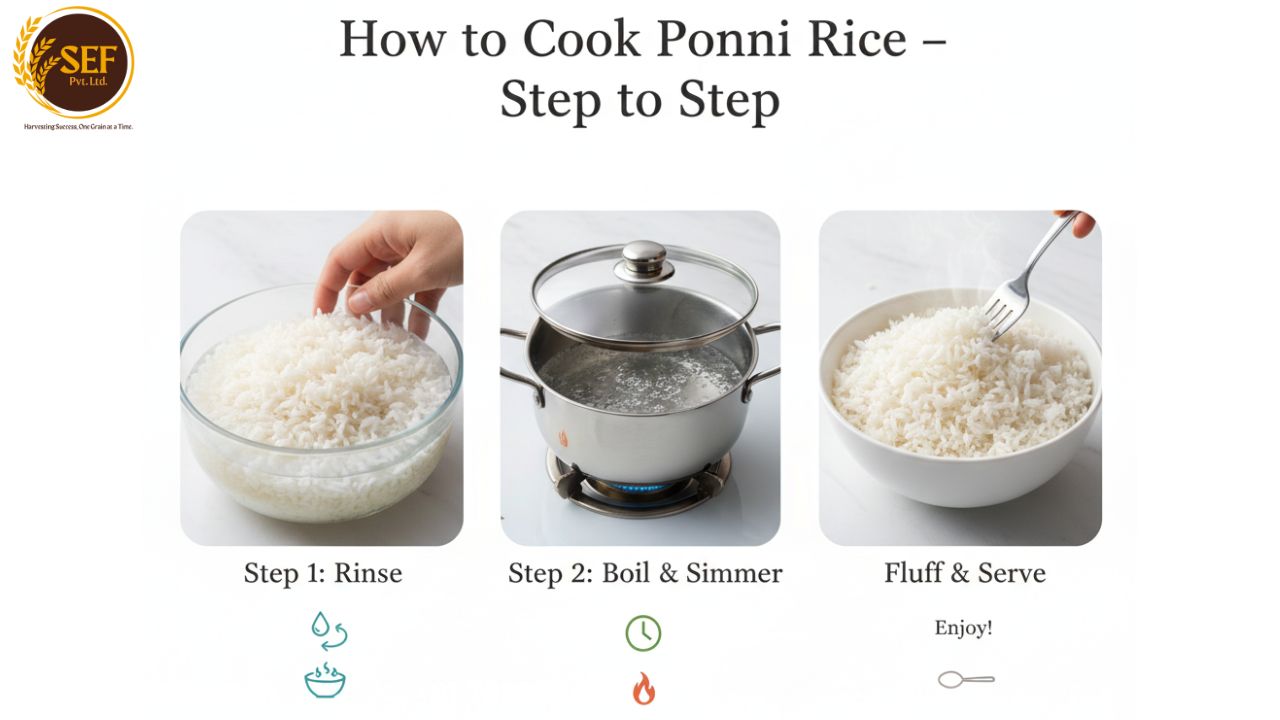
To prepare Ponni rice correctly, follow the cooking methods below based on your kitchen setup.
Each type differs in texture, GI value, and cooking time.
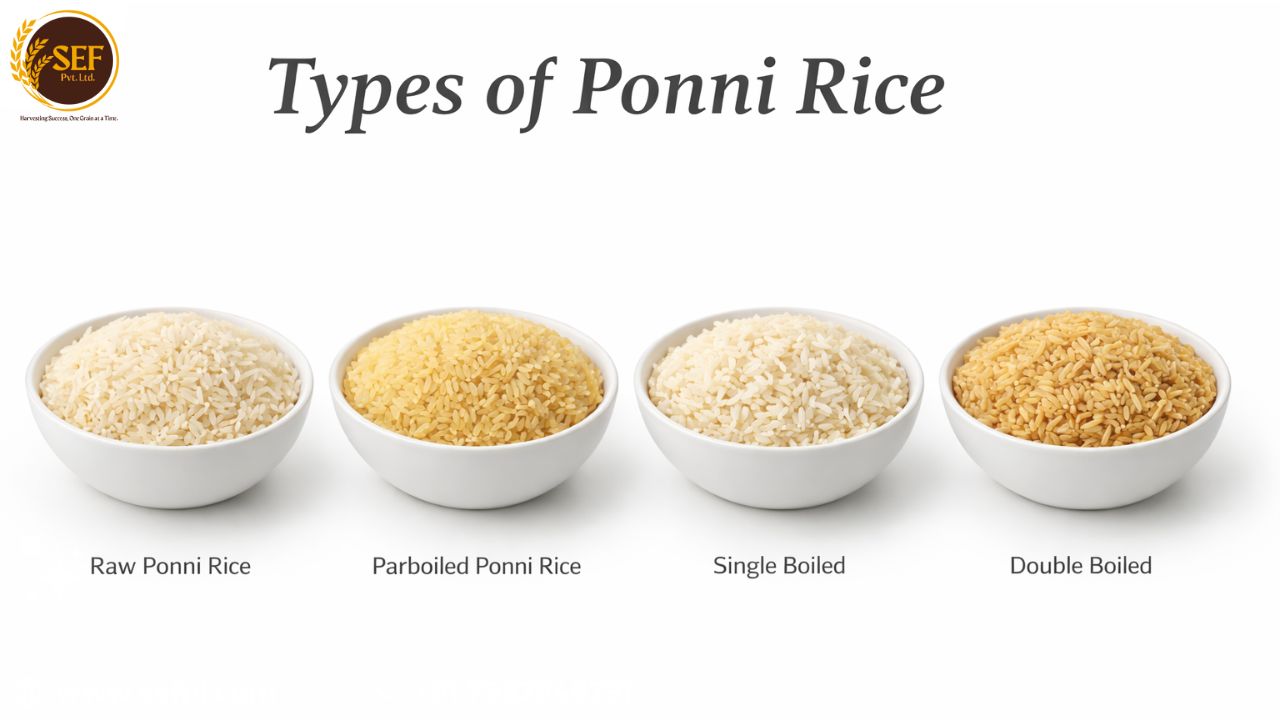
Notably, There are several ponni rice types, each differing in texture, cooking time, and glycemic response:
Therefore, choosing the right type depends on dietary needs and cooking preferences.
| Feature | Ponni Rice | Sona Masoori | Basmati 1121 |
|---|---|---|---|
| Grain Length | Medium | Medium-Light | Long |
| Texture | Soft | Light & Fluffy | Long & Aromatic |
| Glycemic Index | Moderate | Low–Medium | Moderate |
| Best For | Daily meals | Diet-friendly meals | Biryani, pulao |
This comparison also helps readers understand sona masoori rice benefits, which include lower GI and fewer calories, making it popular in weight-loss diets.
Ideal for:
In conclusion, ponni rice is a nutritious, easy-to-digest, moderate-GI rice that suits daily South Indian meals and global export markets. With balanced calories, steady energy release, and excellent texture, it remains one of India’s most preferred mid-grain rice varieties.
Whether you prefer premium long-grain varieties like 1121, diet-friendly options like Sona Masoori, or aromatic varieties in the top 10 types of rice, Ponni rice stands out as a wholesome, flexible choice for everyday consumption.
Looking to source premium-quality Ponni rice for domestic supply or international export? Shah Enterprises delivers carefully milled, export-grade Indian rice trusted by global buyers.
Explore our rice portfolio today and experience consistency, quality, and competitive pricing.
Shah Enterprises supplies high-quality Ponni rice for daily consumption, bulk trade, and global export trusted for purity, balanced nutrition, and competitive pricing.
Ponni rice is special for its soft texture, moderate glycemic index, and easy digestibility. It cooks fluffy and non-sticky, making it ideal for daily South Indian meals. Additionally, parboiled Ponni rice retains more nutrients and offers better blood sugar control than regular white rice.
Both serve different purposes. Basmati rice is better for biryani and festive dishes due to its long grains and aroma. Ponni rice is better for everyday meals because it is softer, more affordable, and easier to digest.
Ponni rice is a specific medium-grain variety, while white rice is a general category. Parboiled Ponni rice contains more fiber and has a lower glycemic impact compared to regular polished white rice, making it a healthier option.
Both are healthy options. Ponni rice is softer and easier to digest, while Sona Masoori is lighter and slightly lower in calories. For daily meals and digestion, Ponni rice is preferred; for weight-conscious diets, Sona Masoori is often chosen.
Yes, Ponni rice is healthy when eaten in moderation. It provides steady energy, supports digestion, and has a moderate glycemic index, especially in its parboiled form.
Yes, diabetics can eat parboiled Ponni rice in controlled portions. It has a lower glycemic response than regular white rice and releases glucose more slowly, helping manage blood sugar levels.
Ponni rice can be identified by its medium-length grains, slightly thick shape, and soft texture after cooking. Authentic Ponni rice is usually labeled as Raw Ponni or Parboiled Ponni, often sourced from Tamil Nadu or Karnataka.
