
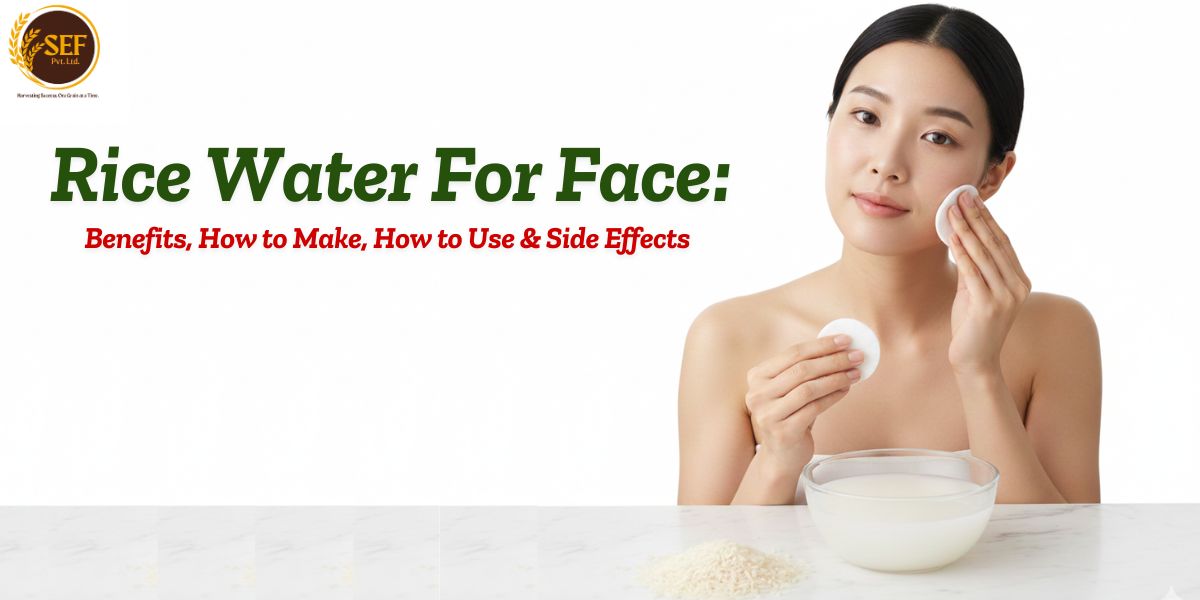
Rice water has become one of the most researched natural skincare remedies, especially for brightening dull skin, reducing spots, and improving texture. With thousands searching daily for rice water for face, this ingredient is now trending in beauty routines worldwide. Additionally, this guide explains its science-backed benefits, how to prepare it correctly, and the best ways to use it for glowing skin.
Rice water is the starchy, nutrient-rich liquid left behind after soaking or boiling rice. Packed with antioxidants, amino acids, ferulic acid, and essential minerals, it helps repair the skin barrier, improve brightness, and support overall skin health. For centuries, many Asian cultures have used rice water as a natural toner, gentle cleanser, and anti-ageing remedy because of its ability to soothe, hydrate, and protect the skin.
While exploring rice water, people often compare different rice varieties. Some prefer traditional options known for black rice benefits, while others use premium Indian grains. Moreover, rice water remains a trusted, effective ingredient in holistic skincare.
| Nutrient | Benefit |
|---|---|
| Vitamin E | Moisturizing and anti-aging |
| Vitamin B Complex | Skin cell repair and regeneration |
| Ferulic Acid | Strong antioxidant that protects skin barrier |
| Oryzanol | Reduces inflammation and soothes sensitivity |
| Amino Acids | Helps skin stay firm and hydrated |
Additionally, these nutrients make rice water suitable for almost every skin type, including sensitive, oily, and acne-prone skin.
There are multiple ways, but the fermented method provides the highest concentration of skin-brightening properties.
Step | Process |
1 | Rinse ½ cup rice to remove impurities |
2 | Soak in 1 cup water for 30 minutes |
3 | Stir and strain the water |
4 | Store in a clean bottle for 2–3 days |
Step | Process |
1 | Prepare soaking rice water |
2 | Leave it at room temperature for 24–48 hrs |
3 | When it smells slightly sour, refrigerate |
4 | Dilute 1:1 before applying |
Fermented rice water contains higher antioxidant concentration and is ideal for pigmentation and uneven skin tone.
Note: Choosing good-quality rice matters. For many households, basmati is preferred, and some ask is basmati rice healthy for the skin use. Yes any clean, chemical-free rice can be used.
Dermatologists often highlight these major benefits:
Rice water helps reduce dullness by promoting cell turnover and improving hydration.
The ferulic acid and niacinamide-like components in rice water visibly lighten spots with continuous use.
Its astringent nature helps tighten pores and balance oil.
Its antioxidants protect the skin from environmental damage and help reduce early signs of ageing.
Its calming properties make it beneficial for sensitive, inflamed, or acne-prone skin.
Furthermore, some nutrition-conscious readers also compare rice varieties to understand internal health benefits. When you research best rice for health, you will find that whole-grain options like black rice or brown rice have higher antioxidants, which indirectly support skin health from the inside.
Using rice water daily can give visible results in 2–4 weeks.
Apply with cotton after cleansing. Leave it on; no need to rinse.
Mix rice water with Multani mitti or rice flour. Apply for 10–12 minutes.
Dab on dark spots directly every night.
Splash it on your face after washing twice a day.
During skincare experiments, many people also read about food habits like eating raw rice benefits. However, raw rice is not recommended for eating due to digestive issues—using rice water on the skin is a much safer and healthier option.
If you want a quick, mild version, here is the simplest method:
Your basic rice water is ready.
For stronger results, use the fermented version, especially if you use rice water at night.
Choosing the right rice variety can also matter if you are using it internally for skin health. Many experts recommend high-antioxidant grains when looking for the best rice variety in India. Meanwhile, those calculating calories for diets often ask how many calories in rice approximately 130 kcal per 100g cooked.
Rice water can even replace chemical cleansers if used correctly.
Method:
This creates a mild, brightening face wash suitable for all skin types.
Some users also consume different rice varieties for overall wellness. Furthermore, reading about best rice for health often helps make better food decisions, which further reflects on skin quality.
Although rice water is generally considered safe, the side effects of rice water may appear if it is used incorrectly or excessively. However, undiluted fermented rice water can cause skin irritation, while overuse may lead to breakouts, especially in oily or acne-prone skin. Additionally, people with fungal acne-prone skin may experience increased sensitivity. There is also a risk of contamination if rice water is stored improperly.
| Type | Preparation Time | Strength | Best For |
|---|---|---|---|
| Soaked Rice Water | 30 minutes | Mild | Daily toner, sensitive skin |
| Fermented Rice Water | 24–48 hours | Strong | Brightening, pigmentation |
| Boiled Rice Water | 15 minutes | Medium | Face wash, hydration |
Rice water suits most skin types, including:
However, people with fungal acne should test on a small area first.
Rice water is one of the easiest, most effective natural remedies for glowing, bright, and youthful-looking skin. With consistent use and the right preparation, it can help reduce pigmentation, improve skin texture, and support overall hydration and nourishment.
Whether you use it as a toner, face wash, or mask, rice water is a gentle skincare solution suitable for all skin types.
While you explore the traditional uses of rice, discover how Shah Enterprises supplies high-quality Basmati and Non-Basmati rice to global markets including UAE, Africa, and Europe with trusted export support.
To prepare rice water for the face, rinse ½ cup raw rice, soak it in 2 cups of water for 20–30 minutes, strain, and use the milky water. This method preserves nutrients and is safe for regular skincare use.
Rice water helps brighten and even out skin tone, but it does not permanently whiten skin. Its natural enzymes and antioxidants support a healthy glow and reduced dullness.
Rice water may help reduce mild tanning over time by soothing sun-exposed skin and improving brightness. For best results, consistent use and sun protection are essential.
Yes, rice water is generally safe for daily use when fresh and properly prepared. Avoid using undiluted fermented rice water daily, as it may cause irritation.
The best time to use rice water on the face is at night, after cleansing. This allows the skin to absorb nutrients without sun exposure interference.
Possible disadvantages of rice water include skin irritation, breakouts from overuse, and contamination if stored incorrectly. Always patch test before full application.
White rice, brown rice, or organic rice are best for making rice water. Avoid polished or chemically treated rice to reduce the risk of residue on the skin.
