

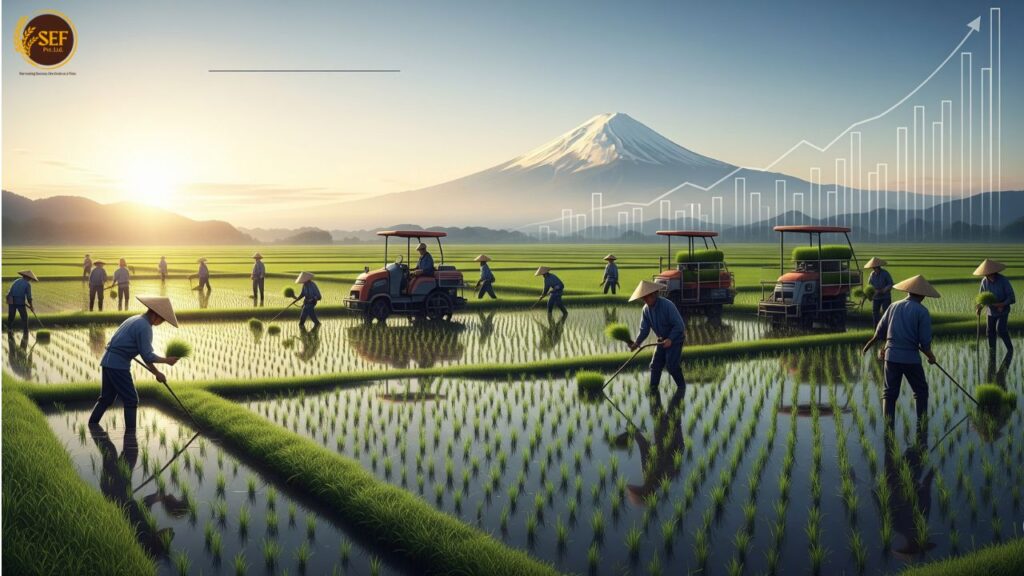
Government Reverses Longstanding Policy to Encourage Increased Rice Cultivation
In a major policy shift, the Japanese government has announced plans to actively promote rice cultivation, breaking away from decades of measures aimed at reducing rice output. The decision comes in response to a sharp surge in rice prices, which have nearly doubled over the past year due to ongoing supply chain disruptions and reduced domestic production.
Prime Minister Ishiba Signals Policy Overhaul
Japanese Prime Minister Shigeru Ishiba revealed the new direction during a high-level ministerial meeting on Tuesday. “In revising the rice field policy for the 2027 fiscal year, rather than saying ‘Don’t grow rice,’ we will shift to supporting farmers to take a positive approach to increasing production,” Ishiba said.
This strategic reversal aims to stabilize rice availability, control price inflation, and restore confidence among consumers and stakeholders in the agri-food sector.
Also Read – India’s Rice Production Forecast to Hit Record 151 MT in 2025–26
Focus on Large-Scale Farming and Technology Integration
To facilitate this transition, the government will extend support for large-scale rice farming operations and provide farmers with access to modern agricultural technologies. Japan’s public broadcaster NHK reports that these initiatives aim to enhance productivity and ensure sustainable rice output.
The administration has also tapped into emergency rice reserves for the first time outside of natural disasters, supplying the domestic market to ease inflationary pressures on consumers and the food service industry.
Political Pressure Mounts Over Soaring Rice Prices
The dramatic increase in rice prices has sparked public discontent, significantly impacting Prime Minister Ishiba’s approval ratings. In recent elections, voters expressed their frustration by stripping the ruling Liberal Democratic Party of its majority in both the upper and lower houses of parliament.
The policy change is seen as an urgent corrective step to address the country’s food security concerns and regain public trust.
Also Read – India Set to Become the World’s Largest Rice Producer in 2024–25
A Historical Shift from Diversification Back to Staple Grain
Japan’s effort to curb rice production began in 1971 as changing dietary preferences reduced rice consumption. As a result, the land allocated for rice cultivation, excluding rice used for livestock feed, shrank from 3.3 million hectares in 1960 to just 1.4 million hectares in 2024.
Although the official reduction policy was abolished in 2018, the government continued to incentivize farmers to grow alternative crops like soybeans. The latest announcement marks a full-circle return to rice-centric agriculture.
Also Read – Global Demand For Premium Basmati Rice Rises: Top Opportunities for Indian Exporters
Final Thoughts
As global rice prices fluctuate due to currency shifts and production changes across Asia, exporters and importers alike must stay informed. At Shah Enterprises, we closely monitor global rice market trends to provide timely insights and consistent quality to our international clients.
Reach out today to export rice from India with a partner trusted for reliability, expertise, and excellence in international trade.
 Chat on WhatsApp