

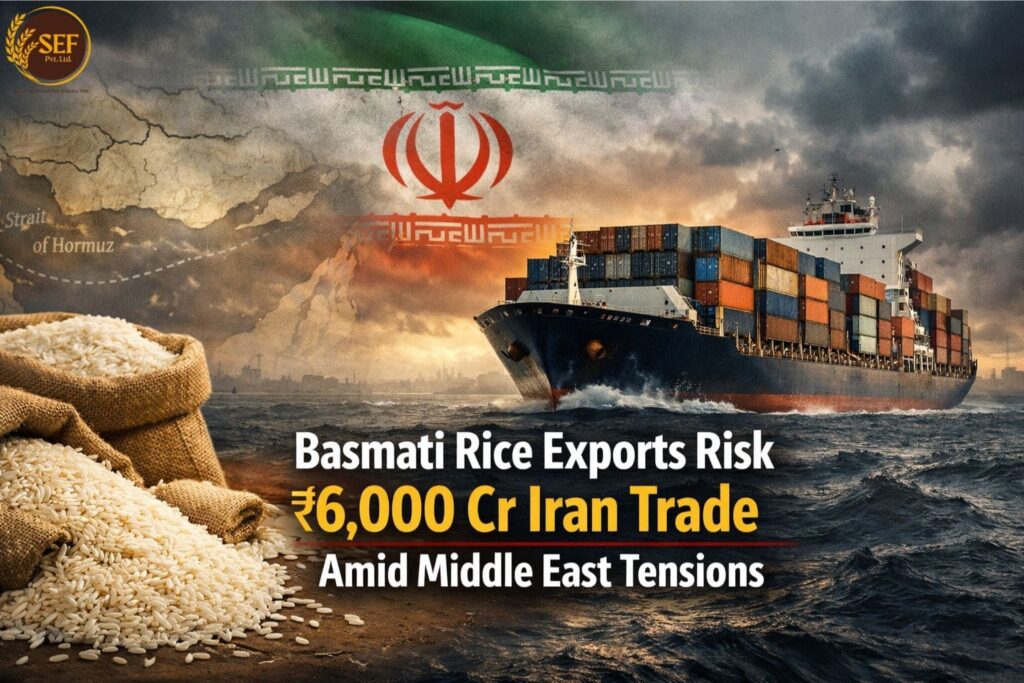
India’s basmati rice exports have entered a phase of uncertainty as tensions escalate across West Asia. Exporters now face rising freight costs, delayed shipments, and payment risks.
The biggest concern centers around Iran, a key buyer of Indian basmati rice. Industry estimates show that India exports nearly ₹6,000 crore worth of basmati to Iran alone. Any prolonged disruption could impact both exporters and farmers.
India leads global basmati trade and supplies more than 70% of the world’s premium aromatic rice. However, current geopolitical instability has started to pressure trade flows.
Strait of Hormuz: A Critical Shipping Lifeline
The situation in the Strait of Hormuz has triggered serious concerns among exporters. This narrow shipping corridor handles a major share of global oil and cargo movement.
If restrictions tighten, freight rates and insurance premiums may surge immediately. Shipping companies have already shown caution in accepting new cargo from high-risk zones.
As a result, exporters are monitoring bunker fuel prices and vessel availability closely.
Indian Rice Exporters Federation Issues Advisory
The Indian Rice Exporters Federation (IREF) has advised exporters to avoid signing new Cost, Insurance and Freight (CIF) contracts with buyers in Iran and Gulf nations.
Under CIF contracts, exporters bear freight and insurance costs until the cargo reaches the destination port. During geopolitical crises, these costs can rise sharply.
Instead, IREF recommends shifting to Free on Board (FOB) agreements. Under FOB terms, buyers take responsibility for freight and insurance. This strategy reduces exporters’ exposure to sudden cost spikes.
This proactive approach helps protect margins during volatile periods.
Insurance Premiums and Payment Delays Likely
Exporters expect insurance companies to revise premiums upward if tensions intensify.
Shipments routed through Iran’s largest port, Bandar Abbas, have already faced delays. This port plays a crucial role in supplying Afghanistan and nearby markets.
If disruptions continue, exporters may face:
- Delayed cargo clearance
- Slower payments
- Higher working capital pressure
- Contract renegotiations
Therefore, many exporters now avoid open-ended or unhedged contracts.
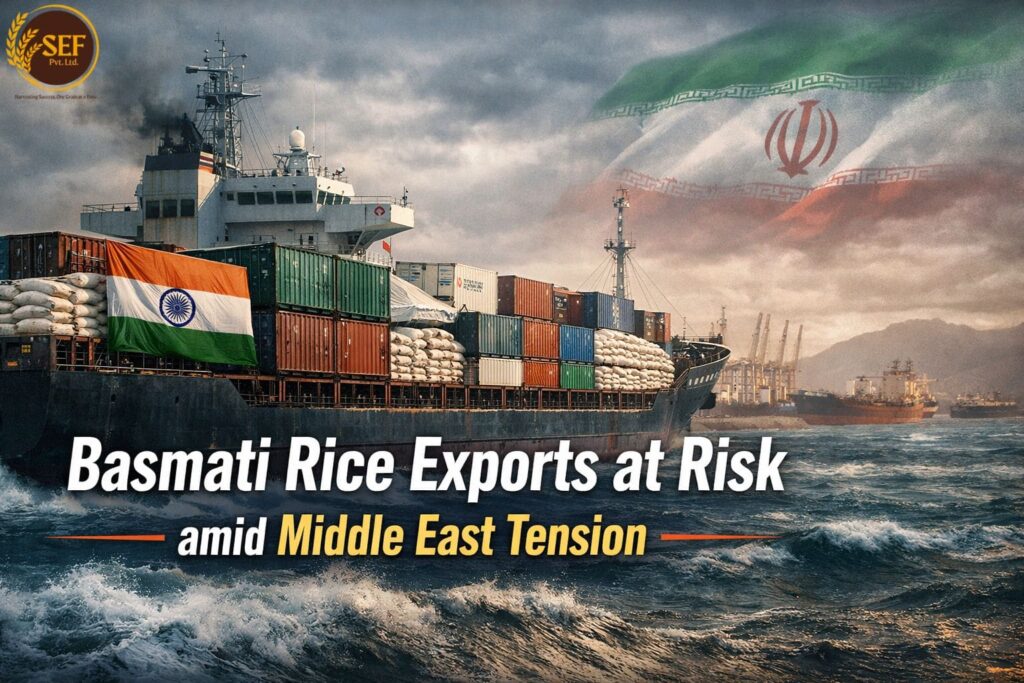
₹50,000 Crore Basmati Industry Under Pressure
According to Agricultural and Processed Food Products Export Development Authority (APEDA), India exported nearly 6 million tonnes of basmati rice worth around ₹50,000 crore in FY 2024–25.
Between April and December 2025 alone, exports to West Asian countries reached ₹27,197 crore.
Nearly 50% of India’s basmati shipments go to five key markets:
- Saudi Arabia
- Iran
- Iraq
- United Arab Emirates
- Yemen
This heavy regional dependence increases vulnerability during conflict.
Punjab and Haryana Farmers May Feel the Impact
The pressure may soon reach farm level.
Punjab and Haryana together account for nearly 75% of India’s premium basmati production.
- Punjab contributes about 40%.
- Haryana contributes around 35%.
If exporters face sustained losses, they may reduce procurement prices. This situation could directly affect farmgate returns.
Interestingly, wholesale basmati rates have already increased by 10–15% in the past month. You can track broader rice prices in India to understand how global tensions influence domestic markets.
Market Outlook: Short-Term Volatility, Long-Term Strength
At present, exporters report partial disruptions. Some vessels await clarity before entering sensitive routes.
If the situation stabilizes quickly, trade may recover without lasting damage. However, prolonged conflict could strain supply chains and impact farmer incomes.
Despite these challenges, India remains dominant in global basmati trade. Its strong production base and export network provide resilience.
To understand India’s competitive strength, you can also explore the top 10 rice exporters in India, which highlights leading companies driving global shipments.
Expert View: Risk Management Is Key
Industry experts suggest exporters should:
- Shift to FOB contracts
- Hedge currency exposure
- Diversify export markets
- Monitor geopolitical updates daily
A strategic response can limit losses and protect long-term growth.
Conclusion
India’s basmati export sector stands at a critical juncture. The ₹6,000 crore Iran market faces uncertainty due to escalating tensions in West Asia.
While immediate risks include higher freight, insurance premiums, and payment delays, the long-term outlook depends on geopolitical stability.
Exporters and farmers alike now watch developments closely. The coming weeks will determine whether this disruption remains temporary or evolves into a larger trade challenge.