

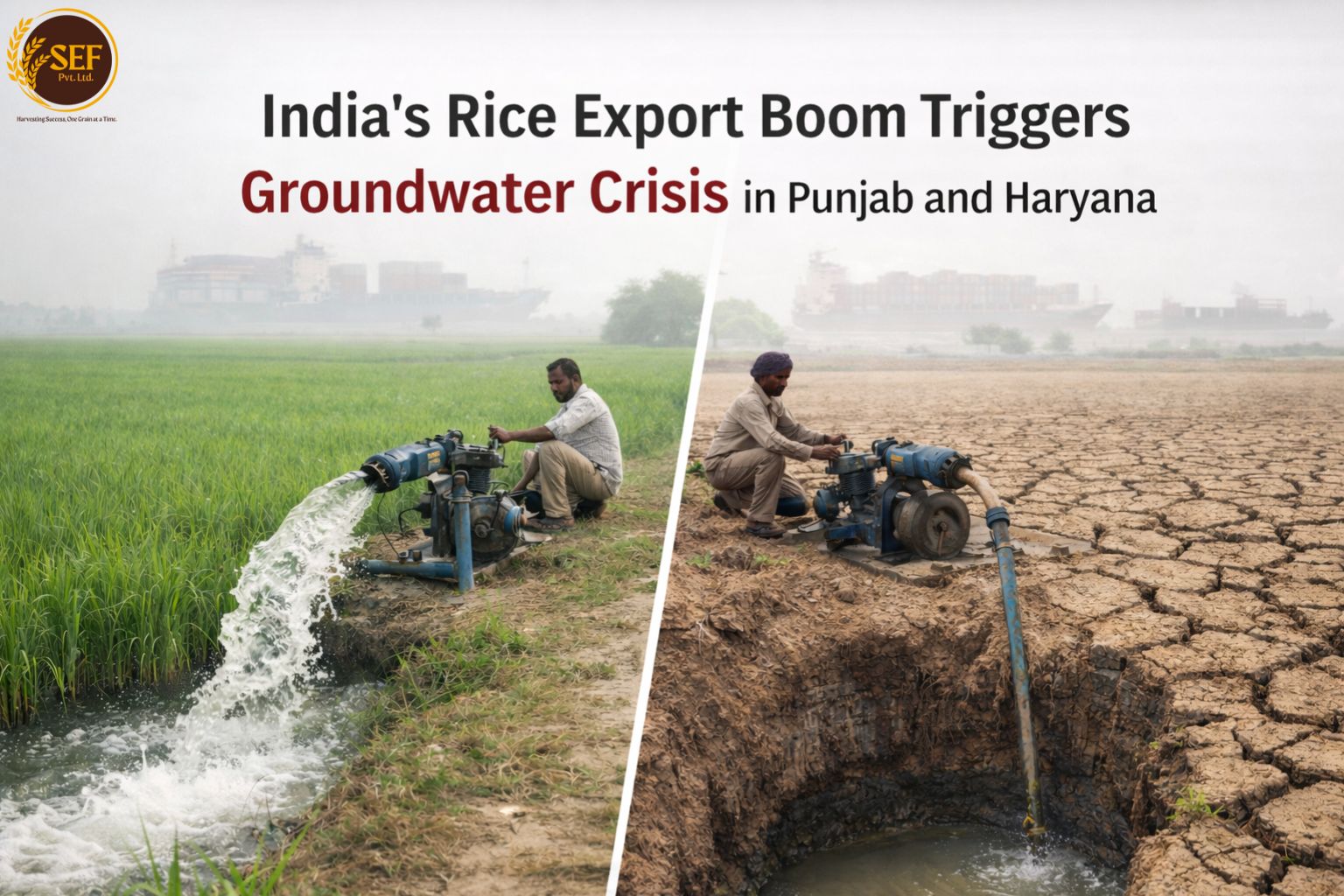
India’s rise as the world’s largest rice exporter has strengthened its position in global food trade. However, the rapid expansion of rice cultivation is also triggering serious concerns over falling groundwater levels in key producing regions.
Over the past decade, India has almost doubled its rice exports, with annual shipments crossing 20 million metric tonnes. This growth has supported foreign exchange earnings and reinforced India’s dominance among the top 10 rice exporter companies in the world. Yet, the environmental cost is becoming increasingly visible.
Falling Water Tables in Key Rice States
Punjab and Haryana, often called India’s rice bowl, are facing sharp groundwater decline. A decade ago, water was available at around 30 feet. Today, farmers report drilling borewells as deep as 80 to 200 feet.
Government data and university research confirm that groundwater extraction has accelerated in the last five years. In many districts, aquifers are now classified as “critical” or “over-exploited.” As a result, irrigation costs are rising rapidly.
Moreover, deeper drilling requires powerful pumps and higher electricity use. This adds financial pressure, especially on small farmers.
Subsidies Encourage Water-Intensive Farming
Despite water stress, rice remains attractive due to strong government support. Minimum support prices have risen steadily over the past decade. In addition, subsidised electricity lowers the cost of groundwater extraction.
As a result, farmers continue to grow rice even in water-scarce regions. Experts note that these policies unintentionally encourage excessive groundwater use. This imbalance also affects long-term rice prices in India, as higher cultivation costs eventually pass through the supply chain.
Climate Risks Add to the Challenge
Rice farming in northern India depends heavily on groundwater rather than surface irrigation. This makes farmers vulnerable to weak monsoons and climate variability.
Even after two years of good rainfall, groundwater levels continue to fall. In response, some states have restricted new borewells in critical zones. However, existing farmers still face rising costs to maintain production.
Producing one kilogram of rice can consume 3,000–4,000 litres of water. This is significantly higher than the global average, making Indian rice cultivation one of the most water-intensive systems worldwide.
Policy Shifts Under Discussion
To address the issue, some states have begun encouraging crop diversification. Haryana has offered limited incentives for farmers to shift to millets and other less water-intensive crops. However, adoption remains low.
Experts suggest that long-term income assurance is essential. Redirecting a portion of existing rice subsidies could help farmers switch crops without reducing earnings. This approach may also reduce pressure on aquifers and stabilise future production.
Global Impact of India’s Rice Decisions
India accounts for nearly 40% of global rice exports. Any shift in production policy will influence international markets. Import-dependent countries closely monitor India’s supply decisions, making sustainability a global concern.
As one of the leaders among the top 10 rice exporters in India, the country faces a delicate balance. Supporting farmers, protecting natural resources, and ensuring stable exports must go hand in hand.
Outlook
India’s rice export success has strengthened its global standing. However, unchecked groundwater depletion could threaten long-term productivity. Sustainable farming practices and smarter subsidy structures may determine how India maintains leadership while protecting its agricultural future.