

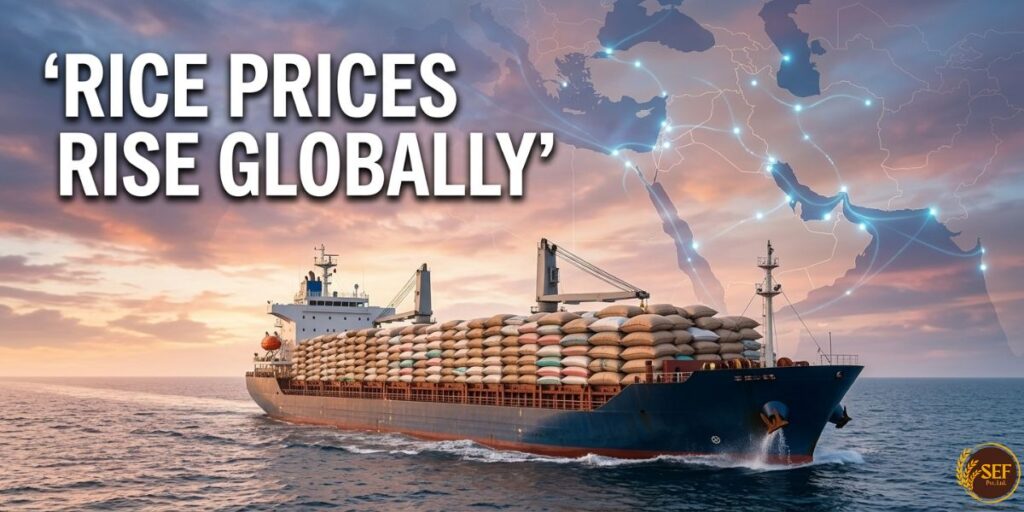
India’s rice export market showed a firm trend this week. Stronger demand and currency movement supported price growth. At the same time, rising global costs linked to the Middle East crisis added further pressure on international markets.
The situation is also influencing Indian rice prices and global trade sentiment.
Indian Rice Prices Move Up on Demand and Rupee Strength
Export prices for India’s 5% broken parboiled rice increased to $344–$350 per metric ton. Last week, rates stayed at $341–$348.
Similarly, 5% broken white rice prices stood at $338–$344 per ton.
A stronger rupee played a key role in this rise. When the currency gains value, exporters adjust prices to maintain margins. At the same time, demand improved gradually in key markets.
As a result, traders are now cautiously optimistic about near-term exports.
Global Markets React to Middle East Crisis
The ongoing tensions involving Iran have increased uncertainty in global trade.
Higher shipping charges, fuel costs, and fertiliser prices are now affecting rice markets worldwide. Buyers expect further price increases. Therefore, many importers have started building stocks.
This trend is supporting export demand from major rice-producing countries.
Vietnam Export Activity Strengthens
Vietnam’s rice market also showed resilience.
- 5% broken rice prices remained at $375–$380 per ton
- Export activity improved due to stockpiling demand
- March exports surged to 1 million tons, up 62.3% from February
However, total shipments in the first quarter of 2026 declined slightly to 2.3 million tons compared to last year.
Traders in Ho Chi Minh City reported stronger buying interest driven by concerns over supply disruptions.
Thailand Prices Jump on Rising Costs
Thailand witnessed a sharp increase in rice prices.
5% broken rice rose to $410–$440 per ton. Previously, it ranged between $370–$375.
Several factors pushed prices higher:
- Increased fuel and freight costs
- Stronger local currency
- Higher domestic rice prices
However, demand remained limited. Most shipments went to regular buyers. New orders stayed weak due to high prices.
Traders in Bangkok also highlighted supply concerns. The dry season reduced production. Some farmers even stopped cultivation due to low profitability.
Bangladesh Faces Supply Pressure
In Bangladesh, rice prices remained elevated.
Fuel shortages created major challenges in rural areas. Many farmers struggled to access diesel for irrigation. This issue came at a critical stage of the paddy crop cycle.
As a result, supply risks increased, which may keep prices high in the coming weeks.
What It Means for Exporting Rice from India
The current global scenario creates both opportunities and risks.
On one hand, rising global prices can support export rice from India. Higher demand from stockpiling buyers may boost shipment volumes.
On the other hand, increasing logistics costs and currency fluctuations can reduce profit margins.
Exporters must balance pricing strategies carefully to stay competitive.
Market Outlook
The rice market is likely to remain volatile in the short term.
If Middle East tensions continue, global prices may stay firm. Freight and input costs could rise further. At the same time, weather conditions and supply constraints will influence future trends.
For India, stable demand and strong production will remain key to sustaining export growth.