

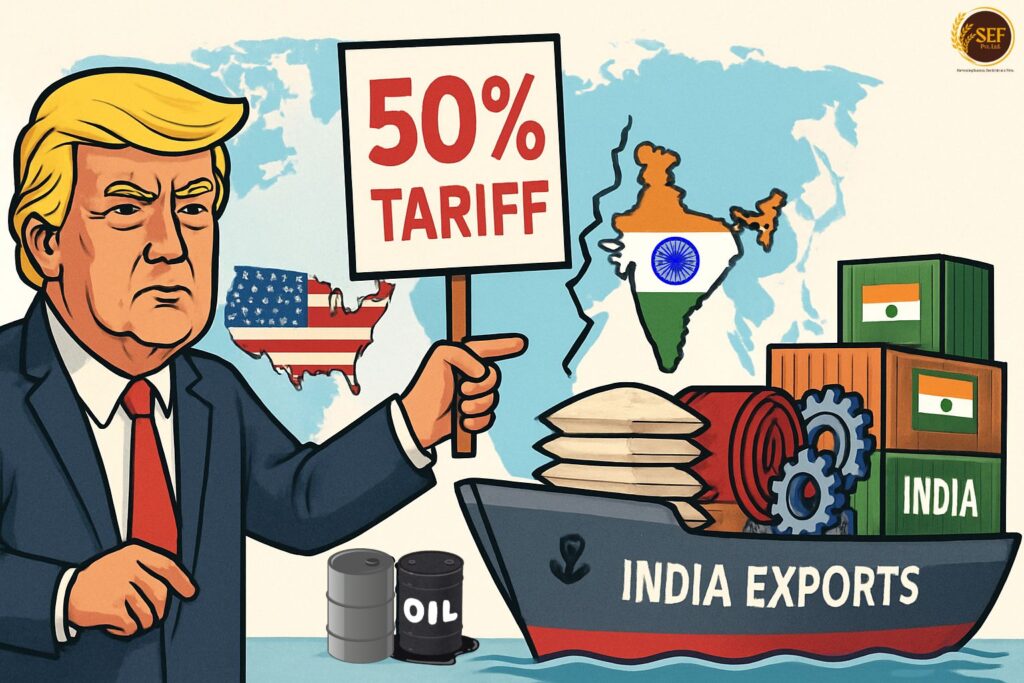
US Targets India for Continued Imports of Russian Oil
In a major policy announcement, US President Donald Trump has issued an executive order increasing tariffs on Indian imports to 50%. This action is a response to India’s continued purchase of Russian crude oil. The new tariff includes an additional 25% duty on top of existing rates, affecting a wide range of Indian export categories.
The policy is scheduled to take effect by 27 August 2025, leaving exporters with just three weeks to adapt.
India’s Response: “Unjustified and Unreasonable”
India’s Ministry of External Affairs quickly responded, calling the move “unfair, unjustified, and unreasonable.” The ministry emphasized that India is acting based on its national interest — similar to decisions made by many global economies.
“India will take all actions necessary to protect its national interests,” the official statement read.
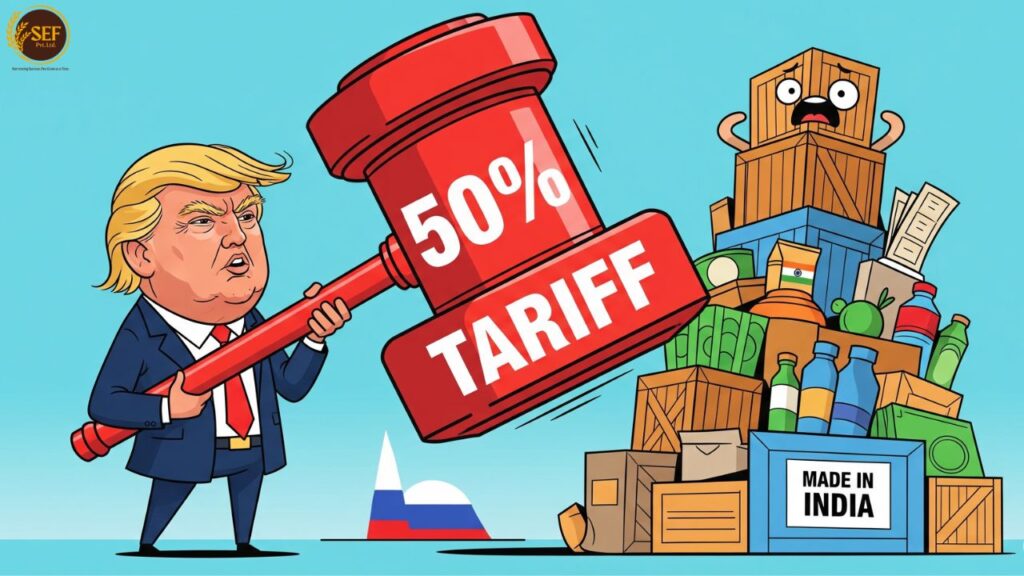
Key Indian Export Sectors at Risk
Industries Likely to Be Impacted
The 50% import duty will likely affect some of India’s largest employment-generating sectors, especially those reliant on the US market:
- Textiles
- Gems and Jewellery
- Auto Parts
- Seafood Exports
These industries contribute significantly to India’s export revenue, and the United States remains one of their largest markets.
Also Read – Global Demand For Premium Basmati Rice Rises: Top Opportunities for Indian Exporters
Temporary Exemptions
Certain sectors, such as:
- Electronics (including smartphones)
- Pharmaceuticals
The current tariffs do not apply to us. However, the US administration has indicated these exemptions may be reviewed in the coming weeks based on further evaluation of India’s trade practices with Russia.
India’s Oil Trade with Russia: The Core Issue
India has become the largest buyer of Russian oil, with over 35% of its crude imports sourced from Russia. According to Kpler data, India imported approximately 1.75 million barrels per day from Russia in the first half of 2025.
Why India Chose Russian Oil?
India argues that its decision to import from Russia followed the European Union’s shift away from Russian supply during the Ukraine crisis. By purchasing discounted Russian oil, India aims to stabilize domestic energy prices and meet growing consumption needs.
Also Read – India Set to Become the World’s Largest Rice Producer in 2024–25
US Justification: Pressuring Russia Through Trade
According to the White House, Russia’s actions in Ukraine pose a threat to global security. The administration believes that countries continuing to import Russian oil indirectly support the Kremlin’s war efforts.
President Trump said during a press interaction:
“India doesn’t care how many people are being killed by the Russian war machine.”
This statement has further strained diplomatic relations between the two countries.
Possible Secondary Sanctions
President Trump hinted that this tariff is just the beginning. He warned of secondary sanctions on other countries involved in Russian trade, similar to those previously imposed on Venezuela’s oil buyers. This signals a broader US strategy to tighten global pressure on Moscow through trade restrictions.
Also Read – India-UK Trade Deal to Push Basmati Exports to 2.5 Lakh Tonnes
Indian Trade Analysts Urge Caution
Trade experts have advised India to avoid immediate retaliation. Ajay Srivastava from the Global Trade Research Initiative (GTRI) said:
“India should remain calm and avoid countermeasures for at least six months. Trade talks cannot succeed under threats.”
Risk to Indian Export Market Share
GTRI estimates suggest that the new tariff regime could reduce India’s exports to the US by up to 50%, particularly in price-sensitive sectors. The Federation of Indian Export Organisations (FIEO) expressed serious concern, warning that over 55% of India’s exports to the US could be at risk.
What’s Next for India-US Trade Relations?
The move marks a significant shift in India–US relations, especially in terms of energy policy and strategic alignment. While the two nations have shared cordial diplomatic ties in recent years, this latest development could lead to deeper trade and political friction.
India faces the challenge of balancing energy security with global diplomatic expectations.
Also Read – India-UK Trade Deal Set to Boost Agricultural Exports by 20% in 3 Years
Conclusion
The sharp tariff hike on Indian imports by the United States reflects the growing complexities in international trade and geopolitics. While India stands firm on its energy strategy, the trade restrictions are set to impact multiple export sectors and possibly reshape India–US economic relations.
Exporters should prepare for near-term disruptions and monitor global policy developments closely.For accurate insights on Indian rice prices and professional guidance on rice export from India, trust Shah Enterprises, your reliable partner in international agri-trade solutions.