

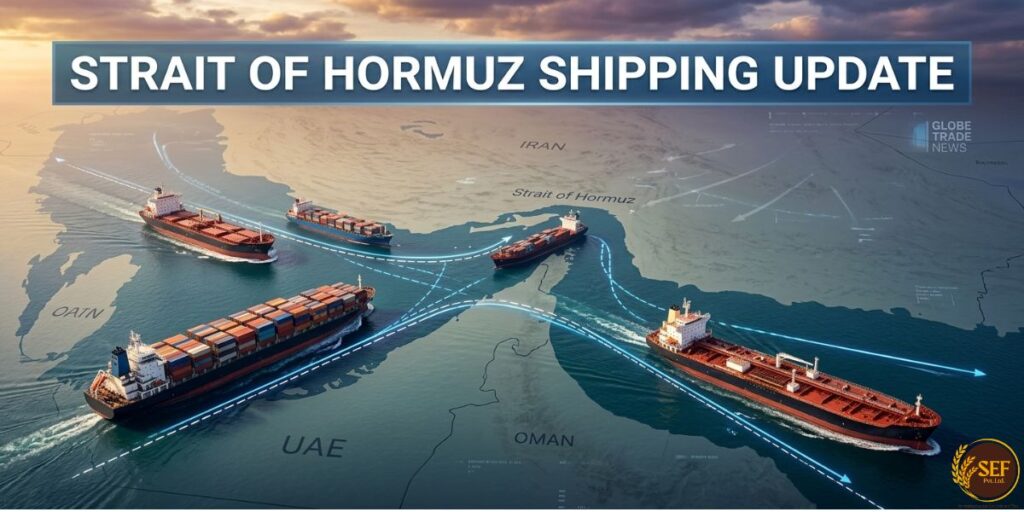
Tensions in the Middle East have taken a new turn after Iran announced revised shipping routes through the strategically important Strait of Hormuz. Authorities have asked vessels to follow specific entry and exit paths and coordinate closely with naval forces.
The move comes amid rising concerns over maritime safety, including possible sea mine risks in the region.
Iran Issues New Navigation Guidelines
Iran’s naval forces have directed ships to use designated routes while passing through the strait. Officials stated that these measures aim to reduce risks and maintain controlled movement.
The updated routes include:
- Entry Route: From the Sea of Oman, moving north of Larak Island, then into the Gulf
- Exit Route: From the Gulf, passing south of Larak Island, then back toward the Sea of Oman
Authorities have advised all vessels to remain in contact with Iranian naval units during transit.
Temporary Disruptions in Maritime Traffic
Earlier reports suggested that tanker movement had slowed significantly. In some cases, traffic stopped briefly due to heightened security concerns.
Officials allowed limited vessel movement before restrictions resumed. The situation remains fluid as authorities monitor developments.
At the same time, the White House has urged Iran to keep the waterway open, citing its importance for global trade.
Strategic Importance of the Strait
The Strait of Hormuz plays a critical role in global energy supply. Nearly one-fifth of the world’s oil and liquefied natural gas passes through this narrow channel.
The route connects the Persian Gulf with the Arabian Sea and lies between:
- Iran
- Oman
- United Arab Emirates
Any disruption in this corridor can impact shipping costs, insurance premiums, and global commodity markets.
Ceasefire Disagreements Add Uncertainty
The developments follow a ceasefire announcement involving the United States. However, disagreements remain over its scope.
Benjamin Netanyahu stated that military operations would continue in Lebanon. Meanwhile, Iran has insisted that hostilities should stop across all regions.
This difference in interpretation has increased uncertainty across the Middle East.
Escalation in Lebanon Raises Concerns
Recent strikes in Beirut and other regions have intensified the situation. Reports indicate significant casualties and damage to infrastructure.
Israeli forces have targeted multiple locations linked to Hezbollah across:
- Beirut
- Bekaa Valley
- Southern Lebanon
The continued escalation highlights the fragile nature of the ceasefire.
Impact on Trade and Indian Rice Prices
Rising tensions in key shipping routes may affect global trade flows. India, a major exporter of agricultural commodities, could feel the impact.
If disruptions continue:
- Freight costs may increase
- Insurance premiums could rise
- Delivery timelines may extend
These factors can influence Indian rice prices, especially for exports moving to West Asian markets.
What to Watch Next
Market participants are closely monitoring developments in the region. Officials have hinted that restrictions may ease soon, depending on diplomatic progress. However, shipping companies may continue to exercise caution until stability returns.
The situation remains dynamic, and further updates are expected as negotiations continue.