

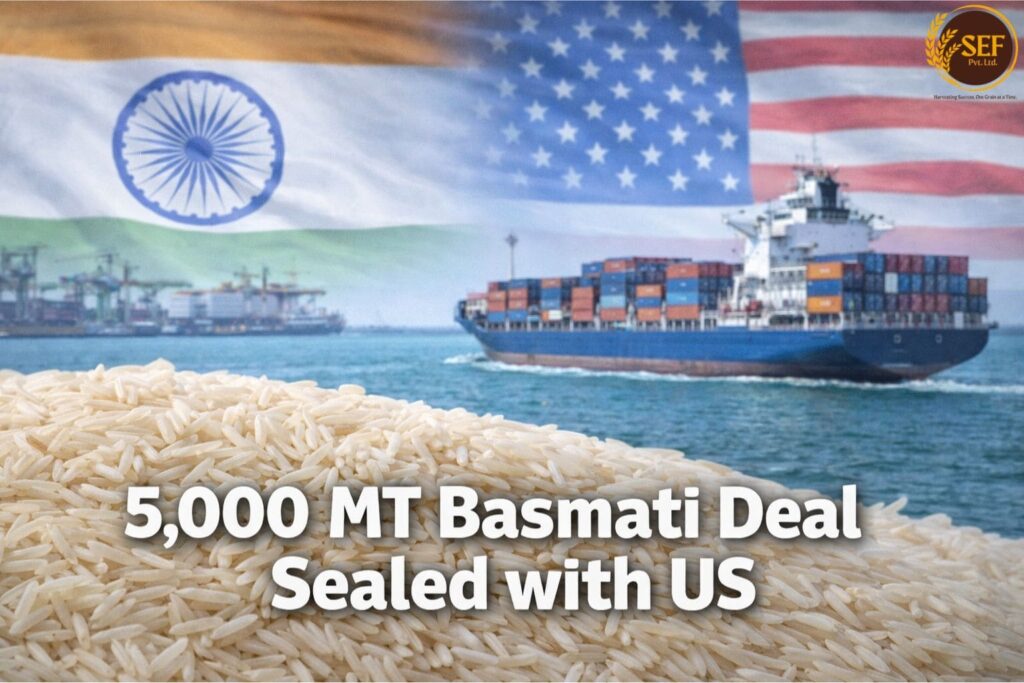
India has secured a fresh export order for 5,000 tonnes of basmati rice from the United States. The agreement follows the finalisation of the India–US trade deal.
Under the new trade framework, the US reduced reciprocal tariffs on Indian goods from 25% to 18%. As a result, exporters expect smoother trade flows and stronger demand.
According to the Indian Rice Exporters Federation (IREF), one of its members finalised the commercial contract with a US buyer. The shipment will include premium-grade basmati rice.
Trade Deal Strengthens Export Outlook
The timing of this deal matters. The tariff reduction improves price competitiveness in the American market. Therefore, Indian exporters may benefit from increased demand in the coming months.
The US remains a key destination to export rice from India, especially premium basmati varieties. Lower tariffs help maintain stable trade relations and protect long-term contracts.
Impact on Indian Rice Prices
This development may also influence Indian rice prices. Large export orders typically support domestic demand. However, stable production levels may prevent sudden price spikes.
Market analysts believe steady exports will balance supply and demand. Consequently, traders will closely monitor pricing trends.
Quality Remains a Priority
The federation has urged exporters to maintain strict quality standards. High-quality shipments strengthen India’s reputation in global markets. In addition, consistent grading and compliance help secure repeat buyers.
India continues to dominate the global basmati trade segment. The country exports to several major markets, including the US, the Middle East, and Europe.
What does this mean for the Rice Industry?
Overall, the 5,000-tonne agreement signals renewed momentum in India–US agricultural trade. It reflects confidence in Indian basmati quality and pricing.
If demand remains stable, more contracts could follow. Exporters now aim to capitalise on improved tariff conditions and strong global demand.